Gulf Security: Saudi Arabia Shoots Down Two Houthi Ballistic Missiles
Debris fell in three western cities as Yemeni forces claimed strikes on major oil and aviation hubs across the kingdom.
By Gabriel Qureshi ·
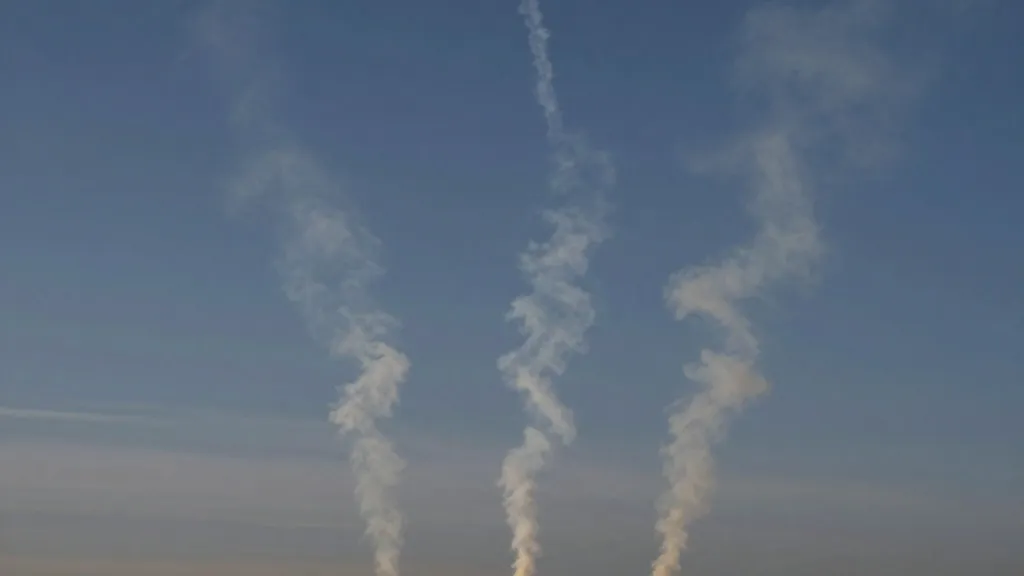
Residents in western Saudi Arabia faced immediate disruption on Saturday as debris from intercepted missiles landed in Jeddah, Taif, and Rabigh. The Civil Defense agency confirmed that two ballistic missiles launched from Yemen were destroyed in the air. The interceptions occurred near the holy cities of Mecca and Medina. The falling debris forced local authorities to manage impacts in three distinct locations along the Red Sea coast.
The missile defense response followed a coordinated attack announcement by Yemen’s Houthi movement. The group claimed it targeted critical infrastructure and energy sectors within Saudi borders on the same day. Houthi military spokesperson Yahya Saree listed specific sites that came under fire. He identified a Saudi Aramco facility in Yanbu and the Rabigh oil refinery as primary economic targets. The attack plan also included two major international airports.
Saree stated that King Khalid International Airport in Riyadh was among the locations struck. The spokesperson also claimed that King Fahd International Airport in Dammam was targeted. Regional airports in Najran and Khamis Mushait were included in the strike list. The Houthis indicated that their offensive aimed to pressure the Saudi government through simultaneous hits on transport and fuel supply lines.
The conflict expanded beyond the Saudi border earlier in the day. The Saba News Agency, which is linked to the Houthis, reported on attacks inside Yemen. Yemen’s National Commission for Human Rights condemned the actions of Saudi forces in the capital, Sanaa. The commission described a "massacre" in the Asr neighborhood. It also reported damage to a cement factory in the Hamdan district. These claims added a new layer to the ongoing exchange of fire between the two groups.
Washington issued a formal advisory regarding the rising tension in the region. The US State Department updated its travel guidance for Israel on Friday. The notice warned American citizens of a heightened threat from Iran-backed Houthi forces. Officials indicated that regional hostilities could escalate rapidly in the coming days. The agency pointed to previous Houthi strikes on Saudi civilian infrastructure as a precedent for the current risk.
The overall travel advisory classification for Israel remained at Level 3. This level urges US citizens to reconsider travel due to terrorism and unrest. The specific risk indicators for certain areas of the country did not change. The State Department also maintained existing restrictions on movement to designated zones. The update served as a signal that the diplomatic and military posture in the Middle East is becoming more volatile.
The US warning specifically cited the history of Houthi attacks on Saudi Arabia. The department noted that previous strikes on airports and critical infrastructure have caused civilian casualties. Those earlier incidents led to major travel disruptions across the region. The current round of exchanges mirrors that pattern of targeting both military and civilian nodes. The US government is monitoring the situation closely as the Houthi campaign intensifies.
Source: The Jerusalem Post