UH Nursing Students Triage 125 Simulated Injured Passengers at Honolulu Airport
The October 23 drill at Daniel K. Inouye International Airport involved state and federal emergency personnel in a mass-casualty response scenario.
By Julian Kobayashi ·
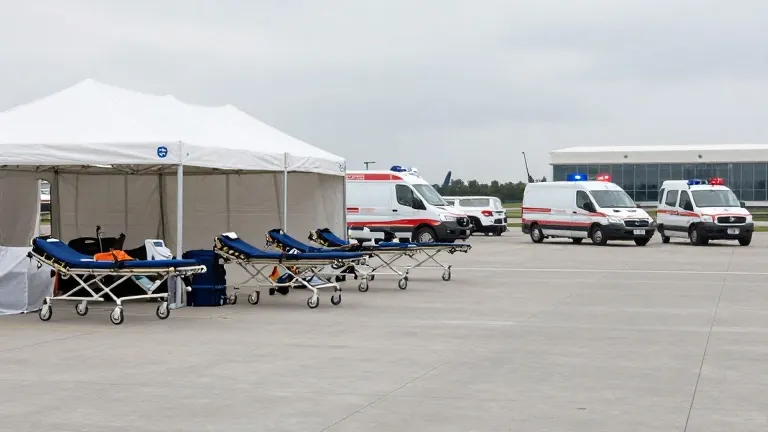
Approximately 125 students from the University of Hawaiʻi at Mānoa School of Nursing and Dental Hygiene participated in a mass-casualty simulation on October 23. The exercise took place at Daniel K. Inouye International Airport and was hosted by the Hawaiʻi Department of Transportation Airports Division. This specific drill, known as the Triennial Airport Disaster Exercise, tests emergency preparedness in high-stakes environments.
Senior nursing students acted as first responders on the tarmac. Student volunteers played the roles of injured passengers. Emergency personnel from local, state, and federal agencies worked alongside the students during the scenario.
Alejah Callorina, a second-year student, portrayed an injured passenger during the drill. She noted that playing the victim offered a different view of patient care. “When you’re on the nursing side, it’s really easy to get caught up in tasks,” Callorina said. “Playing the victim made me realize that we’ve got things going on too, and we’re people as well.”
Amanda Miller, a 20-year Army combat veteran and first-year student, emphasized the value of rehearsal. “No matter how much education or experience you have, it is vitally important to practice, to rehearse,” Miller said. “If you stay ready, you don’t have to get ready.”
Michele Bray, assistant professor and faculty lead for the exercise, stated that the partnership allows students to practice disaster response skills not easily taught in classrooms. Gary Glauberman, associate professor and department chair, added that working with seasoned first responders ensures graduates are prepared to lead in times of crisis.
The UH Mānoa Office of the Vice Provost for Research provided funding for the event. The grant covered trauma kits and medical shears for the exercise. It also financed simulation resources that will be used in future classroom tabletop exercises and clinical skills laboratory activities.
Source: University of Hawaii News