Gulf Sea Attacks Reach Historic High
A surge in maritime incidents and renewed military posturing marks a turbulent week for regional stability.
By Gabriel Qureshi ·

The situation in the Gulf and the wider Middle East remains tense as new incidents at sea and in the air heighten fears surrounding the conflict with Iran. On October 24, security concerns peaked after forces from the Saudi-led coalition intercepted and destroyed a ballistic missile and a drone targeted at Saudi Arabia. In response, the Directorate of Civil Defence warned residents of potential danger and instructed them to follow safety protocols. Minutes later, officials confirmed that the threat had passed in the capital Riyadh, as well as in the regions of Najran and Wadi al-Dawasir.
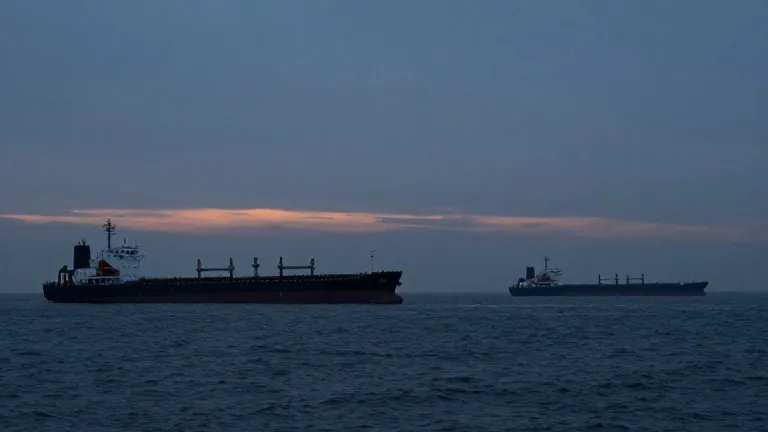
Maritime security has also deteriorated significantly. The navy of Iran's Revolutionary Guard Corps reported that two supertankers struck naval mines while attempting to use an unauthorized route south of the Strait of Hormuz. Additionally, the United Kingdom Maritime Trade Operations noted that a tanker was hit by an unknown projectile seven nautical miles off the Omani coast. According to data from a Washington-based think tank that has tracked such incidents since 2017, October has been the worst month on record for attacks on commercial shipping in the Strait of Hormuz and nearby waters.
Rhetoric between opposing sides has sharpened considerably during this period. US President Donald Trump stated at a rally in Florida that Washington might launch another military operation against Iran. In response, Major General Abdollahi, Iran's armed forces chief of staff, declared that under no circumstances would Iran allow what he described as rusting US warships to re-enter the Persian Gulf. Mohammed Mokhber, an adviser to Supreme Leader Mojtaba Khamenei, added that the threats of war and psychological warfare from Trump and Israeli Prime Minister Benjamin Netanyahu betray desperation rather than power.
Diplomatic efforts are continuing despite the military friction. Iranian President Masoud Pezeshkian is scheduled to travel to Moscow next week for a meeting with Russian President Vladimir Putin. He is also expected to participate in the Gas Exporting Countries Forum summit on October 27. Meanwhile, in London, Foreign Secretary Ed Miliband said Britain is redoubling its efforts to find diplomatic solutions to the conflict. He noted that the ongoing situation is driving up bills for families in Britain.
Tensions are also visible in the occupied West Bank. Israeli forces made Palestinian residents of Hebron leave their homes on foot and demolished several buildings near the area where two Israeli soldiers were shot dead. Troops also detained dozens of people during raids across the territory, adding to the local sense of instability.
In Syria, protest rallies took place on Friday against repeated Israeli incursions in the country's south. These demonstrations followed an incursion earlier in the week that resulted in the death of a man with a disability, sparking further public outcry against the military presence.
Turkish Foreign Minister Hakan Fidan stated that the time had come to reunify Libya's rival eastern and western administrations. He hinted at an official announcement on the issue in the near future, suggesting a shift in regional diplomatic focus.
In Israel, Prime Minister Benjamin Netanyahu warned that the country should prepare for international banking sanctions. He suggested that cryptocurrency could help the nation get around these financial restrictions. These comments came just four days before the Knesset election, adding a layer of economic strategy to the political race.
The combination of record-breaking shipping attacks and escalating verbal exchanges suggests that the region is entering a new phase of volatility. While diplomatic channels remain open, the frequency of incidents at sea indicates that risks to trade routes are increasing. The upcoming meetings in Moscow and the election in Israel will likely shape the next steps in this complex geopolitical landscape.
Source: Middle East Eye