Vance Midterm Strategy: A Blueprint for 2028
Vice President JD Vance is testing a populist message that blends economic nostalgia with cultural critique, signaling a potential shift in Republican rhetoric for the next presidential cycle.
By Gabriel Qureshi ·
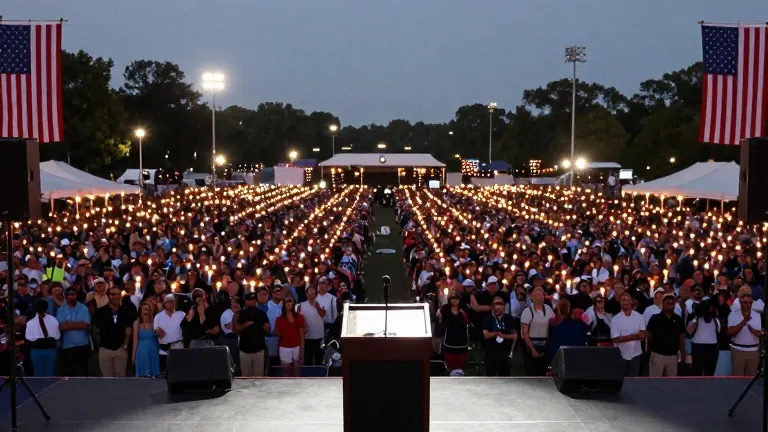
Vice President JD Vance is positioning himself for a 2028 presidential run by adopting a populist tone that mirrors Donald Trump’s core messaging while refining its delivery. During a speech in Weatherford, Texas, on Thursday, Vance targeted Democratic Senate candidate James Talarico, questioning his masculinity. Vance told the crowd, "Now James Talarico has also said that he really has to grapple with his masculinity in addition to his whiteness. And you know, James, the good news is, there ain't a whole lot to grapple with." The remark drew cheers, illustrating a strategy that combines traditional MAGA themes with a more polished political style.
This approach emerged while Vance campaigned alongside President Trump, who spoke in Rock Hill, South Carolina, the same day. Although Vance’s demeanor was less theatrical than the president’s, his speeches contained familiar elements, including promises of restored national greatness. Observers note that this combination offers a preview of what a Vance campaign might look like as 2028 races begin to take shape next year.
Central to Vance’s narrative is a vision of a simpler, more unified America. In North Carolina earlier in the week, he referenced the collective pride felt after the September 11 attacks in 2001. He expanded on this theme in Howell, Michigan, where he recalled his childhood football teams. Vance described looking at old jerseys sponsored by local businesses that no longer existed. He stated, "They were casualties of politicians in a faraway place who didn't give a damn what happened to Michigan or Ohio, and it was us that paid the consequences." This framing contrasts local stability against distant political interference.
Vance also emphasizes cultural harmony to distinguish his message. In North Carolina, he described a time when children from working-class Black and white families played football together without regard for skin color or privilege. He positioned this memory as proof that racial unity existed before recent political movements. While his rhetoric is more eloquent than Trump’s, Vance has also experimented with informal language, telling a Texas audience he was "sweating my balls off" at the podium.
A key challenge for Vance is managing the perception of the current administration’s economic policies. He has been careful to avoid directly linking high fuel costs to the Iran War, which caused gas and diesel prices to rise. In Montana, he compared current prices to spikes in 2022, 1979, 2001, and 2007, attributing the increases to "tin pot dictator" decisions rather than specific policy choices. Similarly, he attributes high beef prices to meatpacker consolidation, sidestepping the role of Trump’s trade policies in angering producers.
Vance leverages his role as head of the presidential anti-fraud task force to connect with voters. He uses his personal history of growing up in poverty in rural southern Ohio to build credibility. In Cincinnati last week, he reminded the crowd that he worked as a cashier at Dhillon Foods and that his family benefited from federal food programs. This biography provides him with a personal narrative of economic struggle and military service that President Trump does not share as directly.
The task force serves as a platform for Vance to discuss his background and policy priorities. He argues that his experience allows him to understand the impact of safety net programs on working families. By highlighting his own history, he seeks to create a sense of shared experience with voters who may feel disconnected from Washington.
However, the path forward for any 2028 Republican candidate involves navigating the legacy of Trump’s unique appeal. Trump’s popularity was driven largely by his bombast and directness, traits that are difficult to replicate. Vance’s strategy appears to be a test of whether a more structured, historically grounded populist message can resonate with the same base. His midterm speeches suggest a candidate who is blending traditional Republican values with a personal story of economic resilience, aiming to offer a distinct alternative to the current administration’s style.
Source: KHPR