Rubio calls on Cubans to act now as Trump revives naval visit plan
The US Secretary of State has encouraged islanders to seize the moment for political transition, while the President outlined a new strategy involving military vessels returning from the Middle East.
By Gabriel Qureshi ·
Tension in the Caribbean has spiked after top US officials issued bold statements regarding the future of the Cuban government. These remarks arrived just days before critical midterm elections, adding a layer of geopolitical drama to the domestic political cycle.
Secretary of State Marco Rubio addressed the island's population directly through a social media platform. He targeted citizens who desire positive shifts in their nation's direction. In his message, he highlighted widespread frustrations with broken promises and systemic corruption. He also criticized the comfortable lifestyles enjoyed by a small elite. To facilitate change, he proposed a specific collaboration with American intelligence agencies. He described this potential alliance as a discrete partnership with the CIA. It is worth noting that he likely intended the word discreet, implying secrecy, rather than discrete, which means separate.
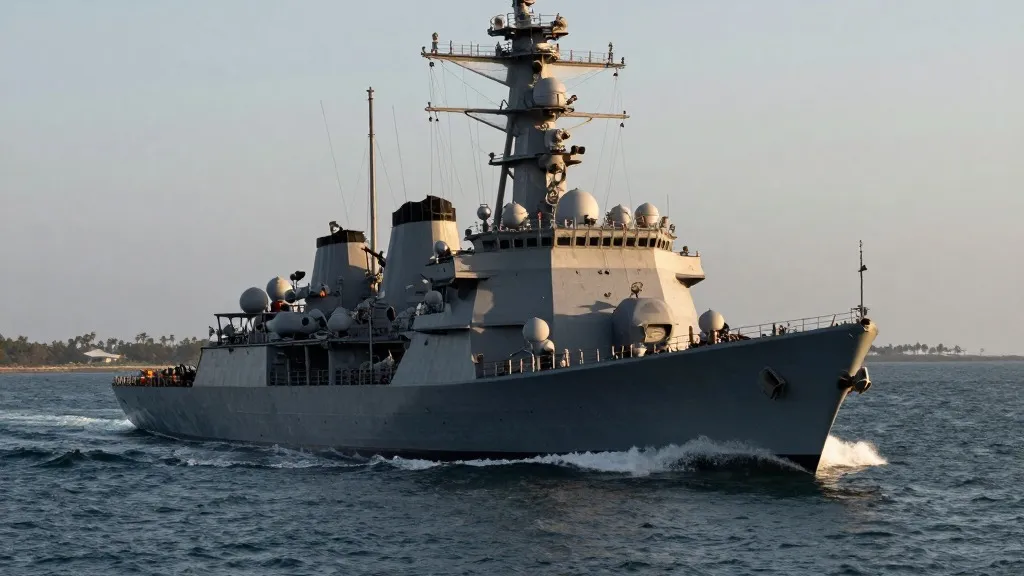
President Donald Trump reinforced this aggressive posture during a campaign rally in South Florida on Friday. Responding to a question from the audience about the island, he revisited a military concept he first suggested earlier in the year. He had not discussed this idea in recent months until now. The President described a scenario where US warships returning from operations in Iran would make a brief stop near Cuba. He stated that the vessels would halt approximately fifty yards from the shore. In his narrative, the crew would raise their hands in a gesture of peace. Following this display, he claimed Rubio would be sent in to finalize an agreement.
Havana reacted swiftly to these comments with public mockery. Deputy Foreign Minister Carlos Fernandez de Cossio took to the X platform to respond. He characterized the US approach as public recruitment for intelligence services. He added that the agency must be facing significant desperation or misery to feel compelled to market its services like a consumer product. This reaction underscores the strained relationship between the two governments at a time when diplomatic efforts have been inconsistent.
The current administration has maintained a firm stance on the island for several months. Trump previously indicated that Cuba might be the next target for intervention after the Iran conflict concludes. This prediction has been made repeatedly, though the expected end to that war has yet to arrive. In May, both leaders raised the possibility of military action. That threat gained weight after the US filed criminal charges against former leader Raul Castro. Trump told reporters in the Oval Office that previous presidents had considered intervention for decades. He expressed confidence that he would be the one to execute it. Rubio argued that Cuba remains a national security threat due to its alliances with US adversaries. While the administration seeks a peaceful outcome, officials doubt the current leadership is willing to negotiate effectively.
Rubio had remained relatively quiet on the topic for weeks prior to this week. During a Fox News interview on September 29, he described the island as having already fallen. He depicted a nation with a broken economy, led by figures promoting a revolution that has been inactive for twenty years. He expressed hope that the country would choose a different path. He also stated that the US would not allow the island to serve as a base for operations against American interests. Notably, he did not mention any specific intelligence operation at that time.
Diplomatic relations have been mixed in recent months. Senior US aides, including Rubio, met with Cuban officials to explore improved ties. However, the American side left those discussions unimpressed, leading to the implementation of further sanctions. At the United Nations General Assembly last month, Trump stated that Rubio was deeply engaged in negotiations. He predicted that a deal would be reached and that military force would not be necessary. Yet, earlier this week, the two governments clashed at the UN. Washington worked to build a coalition against an annual vote condemning the US economic embargo on the island.
The backdrop for these political maneuvers is a severe economic and energy crisis that has plagued Cuba since 2020. The island's gross domestic product has contracted over this period. Its ten million residents have endured frequent blackouts, food shortages, and high inflation. These conditions have sparked waves of protests and driven hundreds of thousands of citizens to emigrate, with many choosing the United States as their destination.
Source: The Guardian