Iran Vows to Target US Warships as Oil Nears $117
Iran's military claims the ability to strike US ships in regional waters while the Trump administration weighs its next move in a conflict that has pushed crude prices to multi-month highs.
By Yuna Fletcher ·
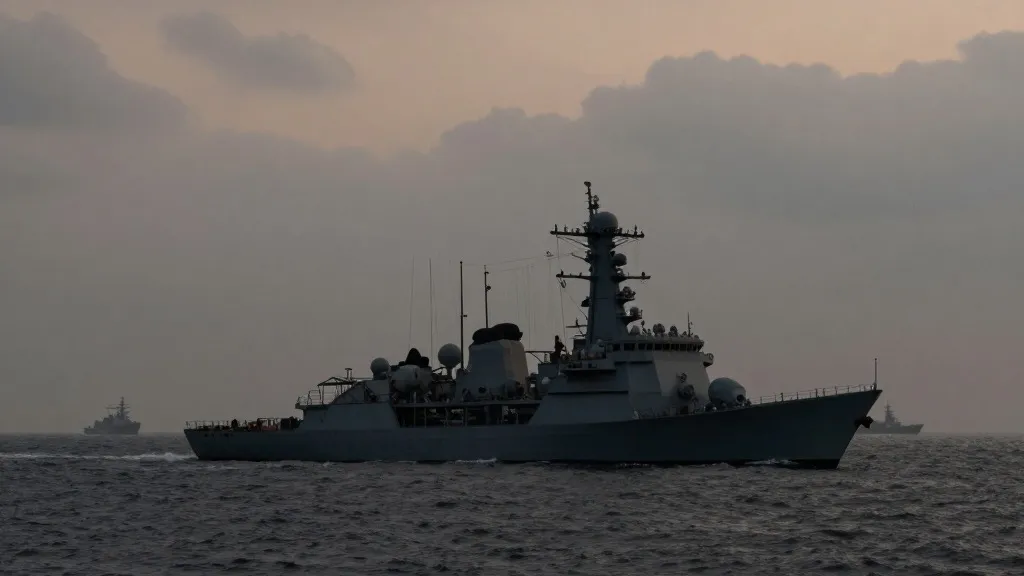
Iran's top military officer declared Saturday that the country is prepared to fire on American warships in the region, raising the stakes for Washington as it considers whether to launch fresh strikes against Tehran. The statement followed comments from President Donald Trump at a rally in Florida on Friday, where he said the US military "may do another Epic Fury," invoking the name of the bombing campaign that opened the current conflict.
Ali Abdollahi, chief of general staff of Iran's armed forces, said in a message carried by state media that the US Navy cannot re-enter Iranian territorial waters or their surroundings. "The US president can only dream of their soldiers and military again entering the Persian Gulf," Abdollahi said. He argued that American assertions that Iran's military capacity has been largely neutralized are undermined by Washington's reluctance to move aircraft carriers and support vessels closer to Iranian coastlines.
Trump has publicly weighed two options: a decisive round of massive strikes to end the fighting, or continued reliance on a naval blockade and sanctions to squeeze Tehran's economy. Abdollahi said Iranian forces intend to "drown" the United States and Israel in a "quagmire" in retaliation for the February 28 attack that began an eight-month war.
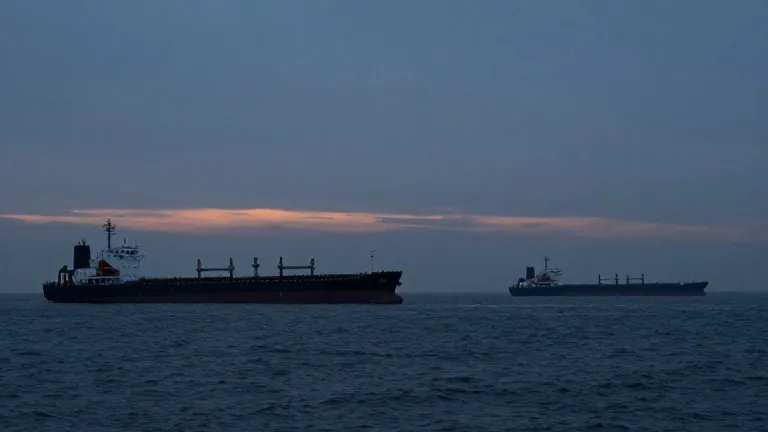
The Strait of Hormuz remains a flashpoint. The Islamic Revolutionary Guard Corps reported that seven tankers were struck or hit mines in a single overnight period, and on Friday claimed that two supertankers ran into mines. Brent crude, a global oil benchmark, climbed to roughly $117 a barrel, a level not seen since April, as violence around the waterway persists. Washington has reportedly told many diplomatic staff to leave Saudi Arabia, with others scheduled to depart additional countries in the region.
Conflict has spread across several fronts. Iran-allied Houthi forces in Yemen struck Riyadh on Saturday, following recent attacks on Dammam's international airport and the Shaybah oilfield, while Saudi aircraft have bombed Houthi-held areas including Marib and Taiz. In southern Lebanon, Israeli strikes were reported near Nabatieh and artillery shells landed close to Zawtar ash-Sharqiyah. Israeli Prime Minister Benjamin Netanyahu ordered a lockdown of the occupied West Bank after a Palestinian attack killed two soldiers in Hebron; he faces an election on October 27.
Iranian state-linked outlets and analysts say Tehran has activated a "dead hand" doctrine that would allow attacks on US, Israeli and regional interests to continue from all 31 provinces if senior leaders were killed again. The IRGC has threatened seabed internet and communication cables if civilian infrastructure is targeted again. Axios, citing US intelligence, reported that Iran has "substantially increased" efforts to strike American officials in the Middle East and elsewhere.
Diplomatic efforts have stalled. Mediated talks between Iran and Washington have not advanced, and on Friday senior diplomats from Turkiye, Saudi Arabia, Pakistan and Egypt met counterparts from the UK, France, Germany and Italy in Istanbul, without the United States or Iran in attendance. Turkiye's Foreign Minister Hakan Fidan said a new attack on Iran "would widen the war and spread the conflict across the region," adding that "no one is endorsing it at this point." German Foreign Minister Johann Wadephul assigned blame for regional instability to Iran and the Houthis, while the four regional ministers said "Israeli occupation was the main source of instability." All ministers supported the June agreement signed in Islamabad and called for unrestricted passage through Hormuz.
A outlet linked to Iran's Supreme National Security Council described the Istanbul gathering as exposing a "gap between diplomatic claims and realities in the field" and argued that the United States and European powers must make the first concessions. Reformist Iranian newspaper Etemad suggested that the "zero hour" for another intense round of fighting was near. Analyst Reza Nasri posted on X that Iran "will no longer negotiate under bombardment" and would end the cycle "by all necessary means."
Source: Al Jazeera