Hundreds of Billions at Stake as Libya Greenlights Turkish Maritime Corridor
A unanimous parliamentary vote in Libya has formalized a deep sea boundary with Turkey, triggering immediate diplomatic friction with Greece and the European Union over vast energy reserves.
By Julian Kobayashi ·
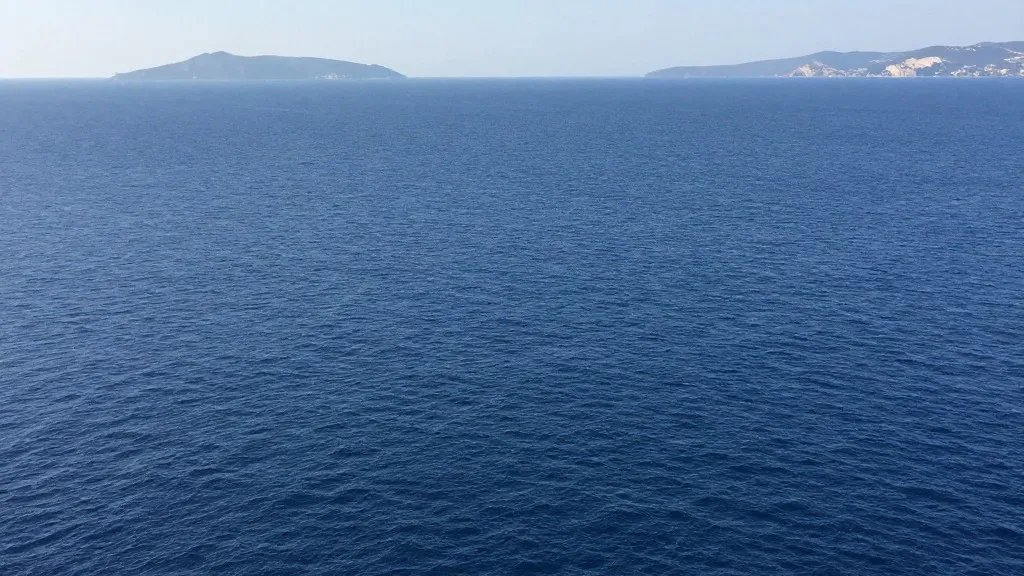
Natural gas reserves estimated at several hundred billion US dollars underpin the most recent escalation in the eastern Mediterranean. On Tuesday, Libya's parliament voted unanimously to approve a maritime agreement with Turkey, effectively establishing a direct economic corridor between the two nations. The move is set to intensify existing friction in the region, particularly with Greece, which views the new boundary as an infringement on its territorial rights.
The diplomatic landscape has shifted significantly since the initial deal was struck in 2019. At that time, Turkey agreed to the corridor with the UN-recognized Government of National Accord based in western Libya. The rival government in the east, led by General Khalifa Hifter, opposed the arrangement during the height of the civil war. However, political dynamics have changed. The eastern parliament has now reversed its earlier stance, and Turkey's Foreign Ministry expressed welcome for the recent legislative victory.
The physical scope of the corridor connects Turkey's southern coastline directly to Libya's northern shore. Recent surveys have identified large oil and gas deposits in this sector, prompting both Ankara and Tripoli to secure joint rights for exploitation. The immediate geopolitical consequence is the placement of the corridor relative to the Greek archipelago. The planned boundary ignores the positions of key Greek islands, including Crete, Karpathos, and Rhodes. Athens maintains that these islands anchor a comprehensive exclusive economic zone, and the Greek Foreign Ministry has formally rejected the accord. It noted that the European Union supports this rejection, with Brussels declaring the memorandum null and void due to violations of third-state sovereign rights and inconsistencies with the Law of the Sea.
Kaja Kallas, the EU's high representative for foreign affairs and security policy, echoed the institutional stance. In a statement on X, she highlighted the Libyan vote and stressed that the agreement infringes upon the sovereign rights of third states. The core of the legal dispute centers on the interpretation of the UN Convention on the Law of the Sea. Greece relies on Article 121, which grants inhabited islands that support their own economic life the same exclusive economic zone rights as mainland territory. Athens argues this covers major islands like Crete and Rhodes. The country also points to a 2022 International Court of Justice ruling involving Colombia and Nicaragua, which suggested that overlapping maritime interests require fair demarcation based on coastlines and geography.
Turkey counters that the specific geography of the Mediterranean warrants special consideration. Ankara argues that if every small Greek island near its coasts were granted a full exclusive economic zone, Turkey would be largely isolated from the open sea. Because Turkey never signed the UN convention, it does not accept arbitration by a UN tribunal. Legal experts remain divided on what constitutes a fair division of these waters in such a complex environment.
The political context in Libya has evolved considerably since the 2019 civil war, when Turkey intervened militarily to support the Tripoli government against Hifter's forces. Since then, a Turkish charm offensive has fostered a rapprochement with Hifter's camp. Turkish firms have secured reconstruction contracts worth billions, and the state oil company TPAO is collaborating with Libya's National Oil Corporation on seismic surveys off the coast. Turkey also continues to supply weapons and training to Hifter's forces, aiming to counter Egyptian and Russian influence in the eastern region.
The new agreement also poses a threat to the planned EastMed pipeline. This project is designed to transport gas from Israel and Cyprus through Greece to enhance EU energy security, but the new maritime corridor cuts across its intended route. Turkey has argued that any cable or pipeline projects on its claimed continental shelf require its consent. Looking ahead, the region risks splitting into two distinct blocs: a Turkey-Libya axis and an EU-supported grouping comprising Greece, Cyprus, Egypt, and Israel.
Source: Deutsche Welle