Güzelyurt: A 1,600-Year-Old Church Now Serves as a Mosque
Located 35 miles from Nevşehir, the town’s population shifted from Greek Orthodox to Muslim in the 1920s, leaving behind a layered architectural history in Cappadocia.
By Gabriel Qureshi ·
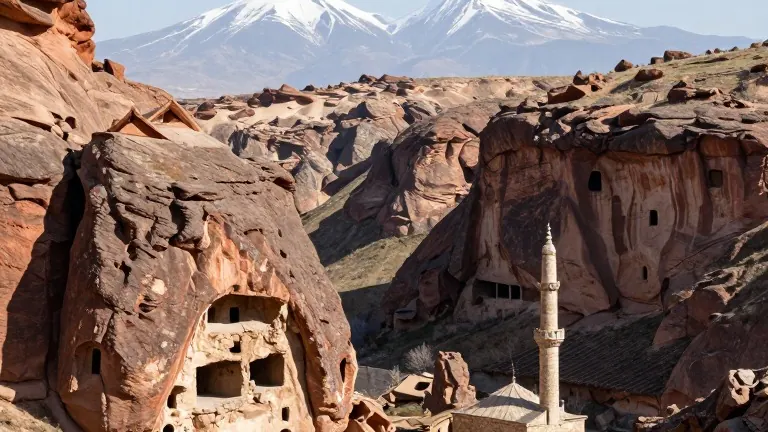
The former church of St. Gregorius in Güzelyurt, Turkey, now functions as a mosque with a single minaret. The structure was built in 385 and stood in a region that was predominantly Greek Orthodox until the mid-20th century. Today, the building reflects a specific demographic shift that occurred across the region.
Güzelyurt sits at the edge of the Ihlara Valley, approximately 35 miles from the regional capital of Nevşehir. It is located in the rural part of the Cappadocia region. Traveler Rick Steves describes the town as a place with minimal tourism and significant historical depth. The site is known in Turkey as a location where Greeks, Turks, Kurds, and Bulgarians have lived in peace.
The population change began in the early 1800s when both Greece and Turkey were part of the Ottoman Empire. Muslim communities existed in Greece, and Greek Orthodox communities existed in Turkey. In the 1920s, the governments of Greece and Turkey agreed to a massive population swap. Most Christians in the area were sent to Greece, while most Muslims in Greece were forced to move to Turkey. Consequently, the historic church in Güzelyurt was converted into a mosque.
The physical landscape of the town displays this architectural evolution. The cliff rising from the gorge contains structures spanning multiple eras. Above the 1,600-year-old church sit troglodyte caves, Selçuk arches, and Ottoman facades. Beyond these older structures stands a 20th-century mosque with a tin dome and twin minarets. The town’s name, Güzelyurt, translates to "beautiful land." This name is spelled out in white rocks on a nearby hillside.
Life in the old town continues despite the crumbling terraces and neglected gardens. Residents maintain their communities by performing daily chores in the ancient environment. Steves notes that the town acts as a cultural repository, preserving fragile traditions. The local market square features a bust of Atatürk, the founder of modern Turkey, who established the separation of mosque and state. Residents gather there to drink sweet çay and play backgammon.
The area retains a rural character that differs from standard tourist destinations. Steves observes that daily life in the surrounding ravine communities appears unchanged from previous centuries. Local families maintain traditions, such as using eagle-bone flutes for communication between herders and their households. The sound of these instruments serves as a signal that the family is together and safe.
The view from the gorge extends to the snowy volcanic slopes of Mount Hasan in the distance. The region combines natural geological features with human history spanning sixteen centuries. Monks built monasteries into the cliffsides during that period. Erosion has driven many residents to more stable dwellings, but some remain in the ancient structures. The town remains a distinct blend of architectural styles and daily traditions in central Turkey.
Source: Everett Herald