Brand Convicted: Prosecution's Predator Narrative Prevails Over Media Bias Claim
A jury in London found the comedian guilty of rape and three sexual assaults, rejecting the defense's argument that journalists poisoned the well of justice.
By Gabriel Qureshi ·
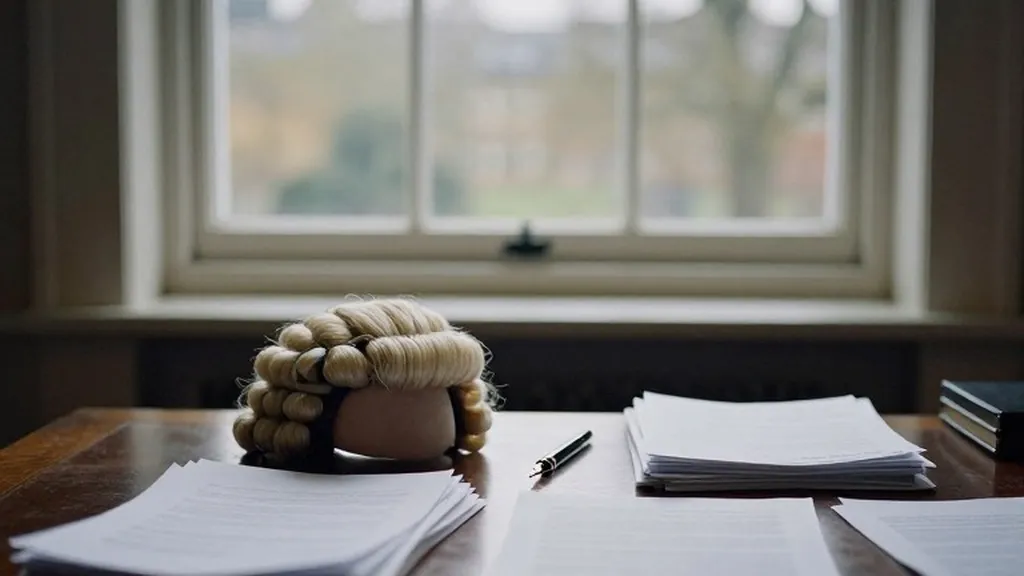
The central contest in the Russell Brand trial was a battle of narratives that played out over four weeks at Southwark Crown Court, a senior criminal court in London that handles serious offenses. The prosecution, led by Riel Karmy-Jones KC, a senior barrister acting as lead counsel, painted a portrait of a calculating sexual predator. She described Brand as a manipulative figure who treated women as a disposable commodity and a means to an end. Her closing arguments emphasized a consistent pattern of behavior, noting that the complainants described a personality change where Brand’s eyes changed and he snapped from charming to frightening. This depiction stood in sharp contrast to the defense strategy, which sought to shift the focus away from the defendant’s conduct and toward the external pressures he faced.
The defense, represented by Ian Winter KC, argued that Brand was not a psychopath but a man who had lived a highly promiscuous life, a choice he described as entirely lawful. Winter contended that the well of justice had been poisoned by journalists, specifically pointing to the 2023 Channel 4 Dispatches documentary and reporting from the Sunday Times. The defense suggested that the women came forward at the invitation of these media outlets rather than through a direct legal process. This argument attempted to frame the trial not just as a question of consent, but as a reckoning with the media’s role in shaping public perception and the subsequent police investigation.
Russell Brand took the stand on the tenth day of the trial to address the jury directly on the issue of consent. He told the court that consent is fundamental, essential, and necessary, and in many ways more important than sex itself. Brand described himself as obsessed with sex as a young man and acknowledged that he had once led a promiscuous life, but he maintained that he had never forced anyone. He stated that his entire life had been consumed by these events, allegations, and accusations. His testimony was a direct rebuttal to the prosecution’s characterization of him as a predator who exploited his status, though it did not fully dismantle the pattern of behavior outlined by the complainants.
The jury, consisting of eight men and four women, deliberated for eight hours and 30 minutes over two days before returning their verdicts. They found Brand guilty of one count of rape and three counts of sexual assault. The specific charges included rape of a young fan in 2009, sexual assault of an MTV employee in 2004, a radio station worker in 2004 or 2005, and a Channel 4 worker in 2009. The jury found him not guilty on two counts of rape and one count of attempted indecent assault. The judge, Mr Justice Bennathan, had required unanimous verdicts on all seven charges, a standard that ensured the jury reached a collective agreement on each specific allegation.
The atmosphere in the courtroom was tense as the verdicts were read. Brand, wearing a grey three-piece suit, closed his eyes and showed no visible emotion. Shortly before the verdicts were announced, he looked at his wife, Laura, who had sat beside him in the dock for the duration of the trial, and said, "Laura, I love you." As he was led to the cells, he made okay gestures to his lawyers and repeatedly said, "I'm good, I'm good, I'm good." This display of composure contrasted with the gravity of the convictions, particularly the rape charge which carries significant legal weight in English criminal law.
The aftermath of the verdict saw a confrontation that highlighted the defense’s ongoing frustration with the media. As Ian Winter KC left the courtroom, he approached Rosamund Urwin, a journalist from the Sunday Times who had been involved in the early reporting that sparked the investigation. Winter said to her, "I hope you are pleased with yourself." Urwin replied, "I'm pleased justice has been done." This exchange underscored the defense’s belief that the media environment had influenced the outcome, even though the judge had previously dismissed Brand’s attempt to stop the trial due to negative coverage, noting that jurors had been selected who had never seen the documentary.
Brand was remanded in custody immediately following the verdicts. In the UK legal system, remand in custody means the defendant is held in prison while awaiting sentencing, a decision often made when a custodial sentence is expected. Judge Bennathan told Brand that the consequence of the rape conviction is inevitably a significant custodial term. He stated that he had to remand Brand in custody and that the defendant faced a custodial sentence of some length. Winter had requested bail over the weekend as an act of humanity, arguing that Brand needed to put his affairs in order and say goodbye to his three young children, one of whom had a birthday that week. The judge refused, stating that the hardship caused to the children was a result of the serious criminal offending by their father.
The Metropolitan Police confirmed that Brand is under investigation over rape allegations by two more women. These are allegations under police investigation, not formal charges. Detective Superintendent Andy Furphy, who led the investigation, stated that Brand used his influence, status, and fame to prey on and exploit women. He noted that as Brand’s profile grew, so did his sense of entitlement. Furphy praised the extraordinary courage and resilience of the women involved and urged anyone who may have been a victim of rape or serious sexual assault to speak to the police. He added that it was likely other women would come forward, suggesting that the conviction might encourage further reports.
Source: BBC News, The Guardian, The Independent, Reuters via France 24