135 Arrested: The Economic Toll of France's Second Weekend of Unrest
French authorities deployed a massive security apparatus to manage cost-of-living protests, resulting in significant arrests and disruptions to major commercial events in Paris.
By Gabriel Qureshi ·
The second consecutive weekend of nationwide protests in France has introduced a new layer of volatility for the country's service sector and cultural economy. While the government worked to contain the demonstrations, the resulting security measures have created friction with local businesses and major event organizers. The core tension lies between the need to maintain public order and the economic pressure exerted by a populace demanding relief from rising living costs. This conflict has now moved beyond the streets and into the balance sheets of museums, retail chains, and international event hosts.
Interior Minister Laurent Nuñez confirmed that 135 individuals were detained during Saturday's actions across major cities. Authorities seized a variety of items, including metal and steel balls, lead pellets, fireworks, slingshots, airsoft weapons, and a katana. Nuñez stated that despite the scale of the deployment, there had been no major incident in the country. To support this effort, up to 70,000 officers were deployed alongside helicopters, armored vehicles, and water cannons, signaling a significant allocation of state resources to manage the social unrest.
In Lyon, where demonstrations were officially banned, approximately 150 protesters attempted to block a road near the city center. Police responded with tear gas to disperse the group. A 21-year-old student who spoke to Agence France-Presse anonymously noted the tactical approach of the officers, describing them as really mobile. The student added that police would disperse marches before they even fully formed, suggesting a strategy focused on prevention rather than reaction.
The political dimension of the protests was evident in Orléans, where thousands marched against a congress held by Marine Le Pen's National Rally party. Le Pen is using this event to launch her bid to succeed President Emmanuel Macron, with elections six months away. Surveys indicate Le Pen is currently best placed to win. Demonstrators chanted slogans targeting both leaders, while police counted 11,000 participants, a figure disputed by organizers who claimed 26,000 attended. The protest involved about 50 groups, including unions and student organizations, and ended peacefully in the early afternoon.
In Paris, the mood was described as calm, though the logistics of the protest were contentious. Hundreds gathered at the Porte d'Italie for the city's only authorized march. Police moved the location at the last minute from the Bastille to the southeastern edge of the city. Union representative Murielle Guilbert called the decision scandalous, arguing that President Macron had barred protesters from demonstrating where they wished. She emphasized that wages have not risen to the expected level. A student named Lucas told CBS Saturday Morning that it was normal for people to be angry given the current economic conditions.
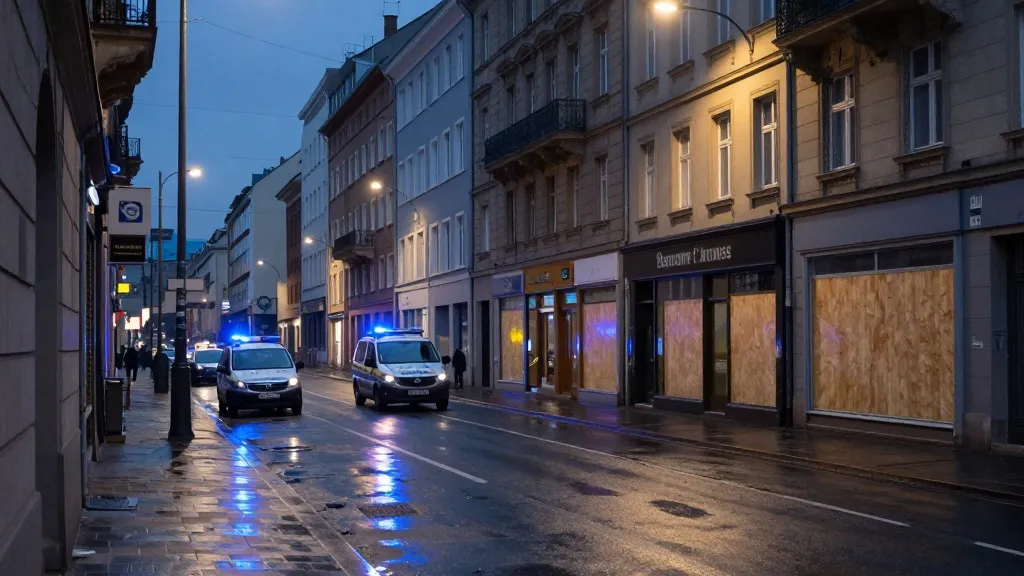
The economic impact in the capital has been tangible. Major museums are closed, and many businesses have boarded up their storefronts. Art Basel opened on Friday but cancelled its weekend program, allowing only one day of operations. The first NFL game in France, featuring the New Orleans Saints, remains scheduled for Sunday, though some related venues were shut on Saturday. A soccer match between Paris Saint-Germain and Olympique Lyonnais, originally planned for Sunday, was moved to Monday night. These disruptions follow a previous weekend in which around 3,000 shops across France were damaged or looted.
The current wave of unrest began last month when high school students in southeastern Paris protested for better conditions. The movement widened as demands for relief from rising living costs gained traction. The Yellow Vests, who emerged about eight years ago in opposition to the government, announced plans for further demonstrations on October 31. They intend to hold rallies and a sit-in outside parliament and city halls, condemning what they term the authoritarian drift of the government.
The social and economic tensions in France are part of a broader European trend. In Italy, additional soldiers were sent to Milan following looting and clashes, with Premier Giorgia Meloni announcing tougher penalties for minors involved in the violence. In Albania, riot police used water cannons on student protesters in Tirana who demanded lower tuition and an end to corruption in education. Meanwhile, thousands of retirees marched in Madrid over pension concerns, and a housing protest was expected in Lisbon, indicating that cost-of-living pressures are driving significant market and social activity across the continent.
Source: CBS News
More Business · World news · Consumer Watch · Report a business · Got a Story?