Tech giants lock in gas plants to power data centers
Corporate disclosures reveal that new fossil fuel infrastructure will increase industry emissions, contradicting long-standing net-zero commitments.
By Julian Kobayashi ·
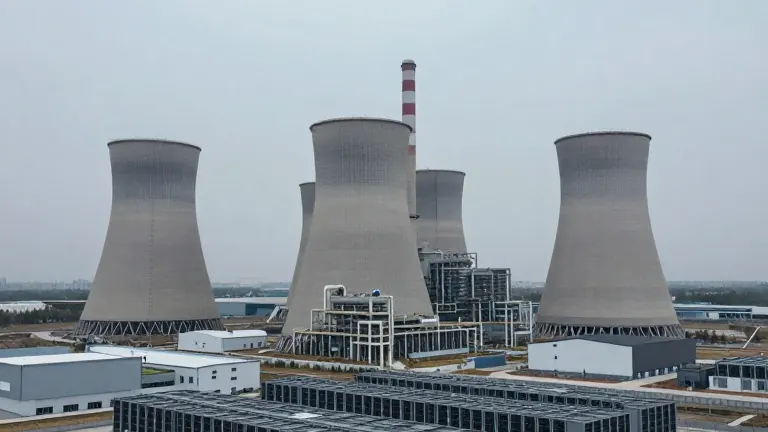
Major technology companies have reversed course on their climate strategies by committing to build new gas-fired power plants to support expanding data center operations.
Amazon, Microsoft, Google, and Meta previously pledged to reach net-zero emissions faster than the Paris Agreement timeline. Jeff Bezos stated in 2019 that Amazon could meet the agreement's goals ten years early. The other tech leaders subsequently vowed to accelerate their own efforts.
The shift toward gas power began as the industry expanded its infrastructure for artificial intelligence and cloud computing. Corporate filings and an analysis by Harvard researcher Gianluca Guidi show these firms are driving the construction of supersized gas plants. These projects threaten to lock in hundreds of millions of tons of climate pollution for decades.
Industry estimates indicate the tech sector's share of global carbon emissions could increase fivefold from 2020 to 2030. This growth would result in the sector producing more pollution than global aviation or shipping combined. Guidi noted that while AI appears digital, its infrastructure requires land, power plants, water, and fuel.
Amazon's carbon footprint reached 80.85 million metric tons last year. This figure is 58 percent larger than the baseline Bezos cited in his 2019 pledge. The company's emissions trajectory now diverges sharply from the Paris Agreement path, which requires a 43 percent reduction below 2019 levels by 2030.
Two gas projects Amazon signed for in Texas and Pennsylvania would generate more carbon pollution than the James H. Miller Jr. coal plant in Alabama. The latter is the dirtiest facility in the United States and powers one million homes. The pollution from these two gas plants alone would equal a 28.5 percent increase over Amazon's current reported greenhouse-gas footprint.
Meta is constructing a nearly six-square-mile campus in rural Louisiana. The facility will consume as much electricity as three cities the size of New Orleans. The gas plants powering this operation will create more carbon emissions than the entire Meta corporation currently generates. Microsoft and Google are also expanding their gas infrastructure in West Texas and Wyoming, respectively.
A data center campus in Pike County, Ohio, will support OpenAI's operations and consume more gas power than the Microsoft and Google projects combined. Anthropic is also signing on to large gas projects in West Virginia and the Memphis area. Guidi said that once billions of dollars are invested in a gas plant, it is likely to keep running for at least two generations.
Allianz reported in June that data center emissions worldwide are on track to double, reaching 643 million tons of CO2 annually between 2020 and 2030. The insurer estimated that these emissions could create about $164 billion in annual climate damages. In contrast, the International Energy Agency forecasts that shipping and aviation emissions will grow by less than 15 percent over the same period.
Tech companies argue that new gas plants are necessary to deliver power quickly for their AI initiatives. Meta told Louisiana regulators last year that the gas plant was crucial for speed to market. Amazon spokeswoman Margaret Callahan said the company has invested in 712 carbon-free energy projects totaling 42 gigawatts worldwide. Microsoft reported matching 100 percent of its annual global electricity consumption with renewable energy last year.
Climate experts warn that these clean energy investments do not change the physical reality of adding new gas plants. Thomas Day, director of corporate accountability at the New Climate Institute, called the trend a disaster from a climate perspective. He noted that these companies are locking in huge fossil fuel projects that will become some of the biggest emitters in the world.
Several firms have vowed to incorporate carbon-capture technology in the future, but almost none of the new gas megaprojects include such equipment. A data center developer said the technology is not currently market-cost-efficient. Guidi said decisions made for today's data-center boom can shape emissions long after the current generation of AI hardware is obsolete.
Source: Alaska Star
More Business · Consumer Watch · Report a business · Got a Story?