Satellite bandwidth: Ukraine regains full drone speeds
Kyiv confirmed that Starlink connections are stable again after a brief period of throttling that disrupted military operations.
By Gabriel Qureshi ·
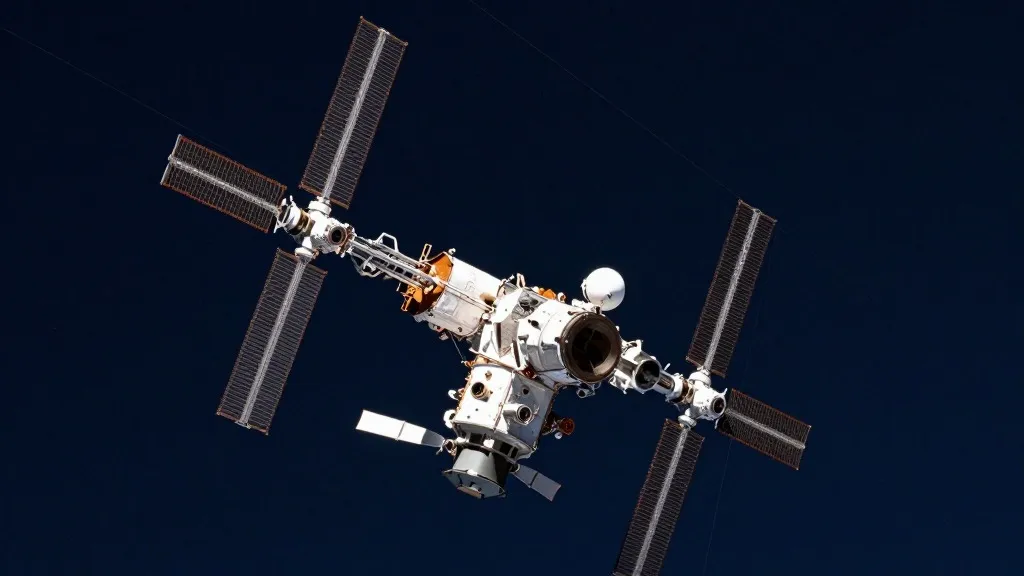
Ukraine confirmed on Saturday that its access to Starlink satellite internet has returned to full capacity, ending several days of restricted connectivity that hampered military operations. Defence Minister Yevhenii Khmara announced the restoration in a statement, marking the end of a technical dispute that affected the front lines.
The restored network now supports speeds exceeding 400 kilometers per hour, a benchmark Kyiv uses to verify full capability. Khmara stated that this recovery is essential for the operation of drones, logistics, and communications for soldiers. Prior to the fix, drones reportedly lost signal when traveling at 161 kilometers per hour or faster, a limitation that reduced their effective range and coordination.
The issue traces back to accusations made last week that US President Donald Trump instructed Elon Musk, owner of Starlink, to impose these limits. Trump initially denied giving such an order but later acknowledged that Musk had resolved the issue. Musk suggested that the US military, which controls the more secure Starshield service used by Ukraine, may have been involved in the initial restrictions.
Kyiv relies heavily on the constellation of 10,000 low Earth orbit satellites for piloting drones and managing operations across the battlefield, particularly in remote areas. The military utilizes both the civilian Starlink service and the secure Starshield network. Russia, which is not authorized to use the system, cannot utilize the network for its long-range strikes into Ukrainian territory.
The technical glitch occurred amid a wider diplomatic tension between Trump and Ukrainian President Volodymyr Zelensky over Ukrainian strikes on Russian oil infrastructure. With midterm elections approaching next month, Trump waived certain sanctions on Russia and agreed to import Russian diesel for the US market. Ukraine and its European allies criticized this move, arguing that the strikes on refineries are necessary to cut Moscow's war revenue.
Trump argued that the strikes pushed global fuel prices higher, though analysts note that price increases this year are largely attributed to the conflict in Iran. Zelensky claimed the US threatened to withdraw intelligence sharing if the strikes continued, a claim Trump denied. The dispute over connectivity thus intersects with broader financial and diplomatic negotiations between Washington and Kyiv.
Fighting continues on the ground despite the restored satellite links. Russia's defence ministry reported on Saturday that its air defences shot down 616 Ukrainian fixed-wing drones, which targeted regions including Russian-annexed Crimea. Sergey Aksyonov, the Moscow-backed governor of Crimea, reported that power and water restrictions were introduced in the region following drone strikes that caused outages.
Ukrainian authorities stated that they struck a missile component manufacturer, a chemical plant, and an aircraft at a military airfield within Russia in the past 24 hours. They also reported that Russia conducted 88 air strikes on Friday, deploying 309 glide bombs and 10,270 kamikaze drones against Ukrainian positions.
Source: BBC News
More Business · World news · Consumer Watch · Report a business · Got a Story?