Pyongyang Expands Drone Output With Moscow
New York Times analysis indicates that Russian technical assistance is enabling North Korea to mass produce attack drones and refine ballistic missile systems.
By Julian Kobayashi ·
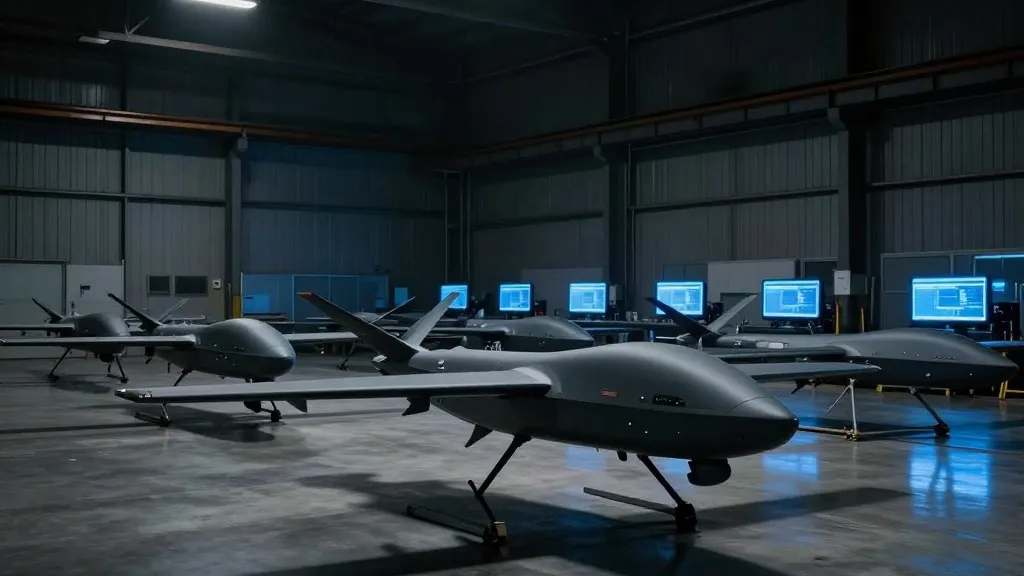
Pyongyang has significantly accelerated its weapons manufacturing capabilities, specifically in the realm of unmanned aerial systems, due to a deepening strategic partnership with Moscow. The New York Times reports that this surge in production is not merely a domestic effort but is heavily supported by Russian military intelligence and industrial expertise. In return for this technological transfer, North Korea continues to supply soldiers, laborers, and conventional arms to the Russian war machine.
The scale of this collaboration has become evident through recent military testing and labor movements. In early October, the North Korean regime tested a tactical ballistic missile it claims is capable of carrying a nuclear warhead. While South Korean and Japanese analysts estimated the flight distance at approximately 700 kilometers, Pyongyang asserted a range of 1,000 kilometers. This development follows a broader pattern of modernization that has intensified since Russia began its full-scale invasion of Ukraine, a conflict that served as a catalyst for renewing the two nations' military ties.
Key figures on both sides are actively managing this relationship. President Lee Jae Myung of South Korea personally observed the country's first test-fire of a hypersonic ballistic missile, a launch that occurred just five days after the North Korean demonstration. This rapid response suggests a growing sense of urgency in Seoul regarding the pace of its neighbor's technological advancements. Analysts like Anton Ponomarenko note that access to Russian deployment data has allowed Pyongyang to enhance the accuracy and maneuverability of its weapons, rendering the threat to the Korean peninsula more tangible.
The most significant shift involves the integration of drone warfare into North Korea's tactical doctrine. Moscow has assisted Pyongyang in establishing a domestic drone production line, driven by observations from the Ukraine and Middle East theaters where cheap unmanned systems have successfully overwhelmed expensive air defense networks. During a recent military exercise, a swarm of drones was deployed to attack a target island simultaneously with cruise and ballistic missile strikes from multiple vectors, showcasing a new level of coordinated offensive capability.
The long-term implications of these developments are substantial for regional defense architectures. The New York Times argues that such evolving tactics will compel South Korea and its allies to redesign their air defense systems, a process that will likely incur significant financial costs. This report aligns with earlier findings by Bloomberg in September, which revealed that up to 25,000 North Korean citizens are working in Russian military plants, including facilities in Tatarstan. Additionally, a North Korean missile unit equipped for strikes against Ukraine has begun deploying in western Russia, further cementing the operational nature of this alliance.
Recent months have seen a steady stream of evidence supporting this deepening bond. In August, Russia reportedly requested KN-30 ballistic missiles from Pyongyang. Earlier in June 2026, the North announced successful tests of a modernized 240mm multiple-launch rocket system, a tactical ballistic missile, and a 155mm long-range artillery shell. These incremental upgrades, combined with the new drone production capacity, mark a decisive shift in the military balance of power in East Asia.
Source: Ukrainska Pravda