Northwest Hay Supply: Drought and High Costs Tighten Winter Stocks
Alfalfa prices have surged past $230 a ton as wildfires, reduced acreage, and rising diesel costs strain ranchers and farmers across the region.
By Gabriel Qureshi ·
Ranchers in the Northwest face tighter hay supplies during the upcoming winter and early spring, according to industry assessments. The shortage is driven by a combination of severe drought, wildfire impacts, and higher production costs that have squeezed growers since late summer.
Market prices for alfalfa have risen sharply. Josh Callen of The Hoyt Report, a news organization covering the Western hay industry, noted that prices last year at this time ranged from $160 to $185 per ton. Current costs now sit between $230 and $250 per ton. Drex Gauntt, a hay farmer based in Burbank, Washington, reported strong buyer interest throughout the season. He described the market as active, with buyers continuing to reach out consistently, indicating sustained demand.
Drought conditions across the West reduced initial hay yields. In Idaho and Utah, dry conditions pulled hay supply away from Oregon. Callen explained that desert feed is scarce due to the drought, while dairy herd numbers have increased, keeping domestic demand high. Wildfires also disrupted grazing patterns. Cattle from affected rangelands were moved off the mountains and plateaus earlier than usual. These animals, typically kept at higher elevations until September or October, returned to home pastures by July. Confined to smaller areas, they consumed more hay than usual.
Farmers face their own set of challenges. Callen cited export struggles, noting that the war in Iran and high shipping rates have pushed exports to their lowest levels since 2014. Scot Courtright, owner of Courtright Enterprises, a hay buyer and exporter, stated that hay acres in the Northwest have dropped by as much as 25%. Production in Idaho, Utah, Wyoming, Nevada, and other Western states has also declined due to drought. With demand remaining stable, these supply reductions have driven prices up.
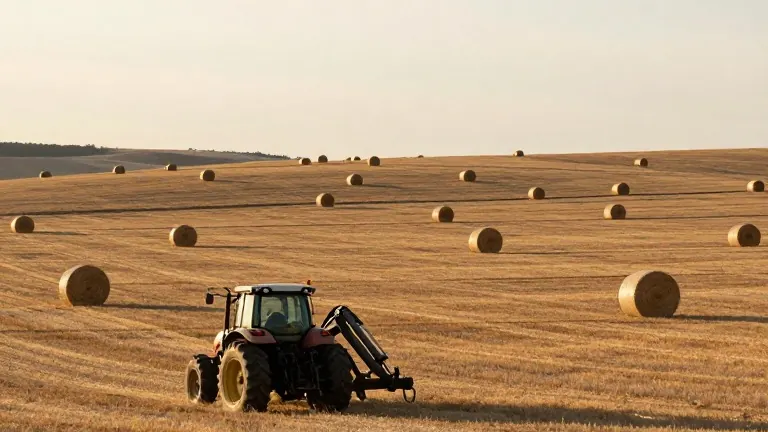
Production costs have also risen. Hay crops rely on irrigation, timely rain, diesel fuel for tractors, and trucks for transport. Diesel prices have reached near-record levels, while drought has limited rainfall. Martin Thompson, a rancher in New Princeton, Oregon, operates on a clear, warm September afternoon. He drives his Kubota tractor up a long gravel drive to move round bales between fields. Although he grows and sells some of his own hay, he noted that prices do not reflect the high cost of diesel fuel. He said hay prices are not what they should be when factoring in the expense of running equipment.
The interplay of weather, logistics, and market forces has created a complex supply environment. Growers who planted less acreage in previous years due to low prices now face higher costs for inputs. The reduction in new acres planted has compounded the effects of this year's drought. As winter approaches, the region relies on these remaining stocks, with prices reflecting the current scarcity.
Source: KOPB-FM
More Business · Consumer Watch · Report a business · Got a Story?