Lula Outpolls Bolsonaro by 4.4 Million in Brazilian Runoff
Brazil's electoral court certified the incumbent's win after a court-ordered two-hour extension of voting time.
By Gabriel Qureshi ·
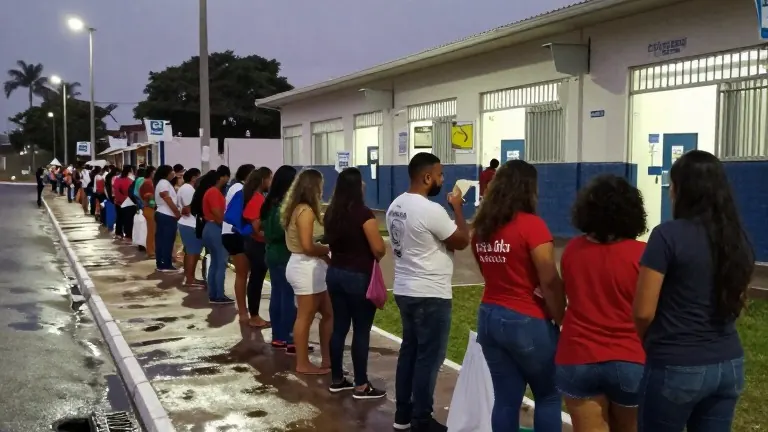
Luiz Inácio Lula da Silva defeated Flávio Bolsonaro in Brazil's presidential runoff on Sunday, taking 51.8 per cent of the vote with all ballots counted, a margin of nearly 4.4 million. The electoral court announced the result after an evening of confusion at polling places. Lula, who turns 81 on Tuesday, begins his non-consecutive fourth term on Jan. 5, 2027.
The count ran late because Brazilian Supreme Court Justice Cristiano Zanin ruled three minutes before the scheduled closing time to keep polls open two more hours. Both campaigns had requested the extension. Lula's team cited breakdowns in bus service to polling places in São Paulo and Salvador, cities that tend to support the incumbent. Bolsonaro's team pointed to heavy rain in Brazil's south, where he draws more support. The decision pushed back tallying by two hours, and it was unclear how many stations stayed open past the original closing time. At one Rio de Janeiro polling place, machines had already been switched off minutes after the scheduled close and could not be restarted. In Brasília, volunteers at a school left 15 to 20 minutes after the original close after passing count information to electoral authorities.
Bolsonaro said he wants the election "anulled" over the extension. Nikolas Ferreira, an ally of his, noted that Zanin, who issued the ruling, once served as Lula's lawyer. At a school count in Brasília, volunteers debated whether to stay after the extension announcement.
Lula addressed supporters after the result and attacked his opponent. "This was a defeat for denialism and lies. I must confess that every time I attended a debate, I felt embarrassed," he said. He also framed the vote in terms of national autonomy: "Either the homeland remains free or we die for Brazil. This country will not accept being anyone's backyard." Lula thanked the Brazilian people and pledged to respect all Brazilians regardless of gender or religion.
His win runs against the direction of recent contests elsewhere in the Latin America, where candidates allied with U.S. President Donald Trump have been taking office. Mexico and Brazil, the region's two most populous countries, now have left-of-centre presidents. Brazil's economy produces $2.6 trillion US in GDP a year, and the result leaves its policy course set despite tariff pressure from Washington.
Bolsonaro led the first round earlier this month by more than 2.2 million votes. The runoff marked the first time since the end of Brazil's military dictatorship in 1985 that the candidate who finished second in the first round won the presidency. Cost of living and security dominated the campaign, with Bolsonaro promising to cut food prices and take a hard line on crime, while Lula put incentives in place to reach undecided voters. Both men faced corruption allegations involving relatives and associates. Lula spent more than a year in prison on convictions that were later annulled, released after 580 days once the Supreme Court voided the case after messages showed the convicting judge was biased. He lost to Jair Bolsonaro in 2022 before beating the former president's son in this cycle.
Supporters gathered on São Paulo's main avenue after the result, and in Rio de Janeiro drivers sounded horns as the tally was confirmed. Rodrigo Valentim, a 51-year-old Bolsonaro supporter and businessman, said a new Lula government would hurt the economy. "I don't understand how people can vote for Lula," he said. "The country is collapsing." Lula, who began as a union leader in the 1970s and co-founded the Workers' Party, won the presidency in 2002 and again in 2006. At 81 he joins Donald Trump and Daniel Ortega of Nicaragua as the oldest presidents in the Americas.
Source: CBC News