Launch Industry Shifts: SpaceX declines military contracts while PLD Space finalizes rocket
A pivotal week for the launch sector saw SpaceX decline Space Force offers, prompting questions about civil-military dynamics, as European and Canadian competitors advance their hardware.
By Anna Nowak ·
The U.S. Space Force’s attempt to secure three launch contracts with SpaceX has been explicitly declined, marking a significant moment in the relationship between the nation’s primary commercial launch provider and its military customer. This development, reported this week, underscores a strategic pivot that may influence how future government procurement strategies are structured in the coming years. The rejection occurs at a time when the industry is grappling with the balance between commercial priorities and national security obligations, setting a precedent for how other major players might navigate similar offers from federal agencies.
Concurrently, the technical challenges of deep space exploration have come into sharper focus through a recent assessment by a NASA safety panel. The panel indicated that SpaceX’s Starship vehicle may require as many as 22 in-space refueling operations to successfully support a lunar landing. This high number highlights the complexity and resource intensity of the mission architecture, suggesting that achieving sustainable lunar access will demand unprecedented levels of operational efficiency and reliability in orbital logistics. For stakeholders in the Pacific Northwest, a region deeply integrated into the aerospace supply chain, this signals that the next phase of lunar infrastructure will be driven by iterative, high-frequency testing and refinement.
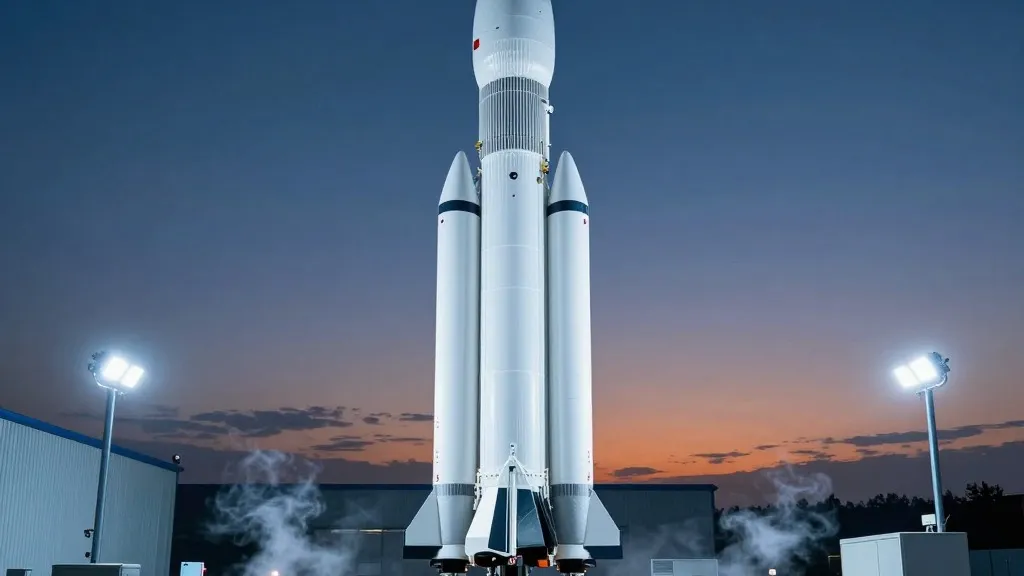
Across the Atlantic, the Spanish company PLD Space is making tangible progress toward its inaugural flight. The Miura 5 rocket, scheduled for its first launch next year, is nearing final integration, according to reports from Aviation Week. CEO Raúl Torres stated in a program update that the company has manufactured three such vehicles, with two specifically designed to qualify key system elements. This phased approach allows the engineering teams to apply lessons learned from each qualification campaign directly to the primary launch vehicle. PLD Space is currently targeting a first flight for this small-lift vehicle before mid-2027, aiming to secure its position in the competitive European launch market.
Detailed technical preparations for the Miura 5 are already underway at PLD’s facility in Teruel. One second stage is fully integrated to initiate system-level testing under conditions that represent actual operating parameters. This stage is undergoing a rigorous qualification campaign, which includes a wet dress rehearsal and a static hot-fire test. These tests are critical for validating the rocket’s performance before it can be cleared for orbital flight, ensuring that the vehicle can withstand the stresses of launch and operate reliably in space.
In Canada, the launch startup landscape is evolving with significant capital movements. Reaction Dynamics, one of three prominent Canadian launch companies, is seeking to raise $350 million to expand its workforce from 68 to over 350 employees. This funding drive is intended to support the development of its Aurora small-lift rocket, which the company hopes will reach orbit in 2028. The expansion reflects a broader trend of increased investment in domestic launch capabilities, aimed at reducing reliance on foreign providers and fostering local industrial growth.
Beyond its immediate small-lift efforts, Reaction Dynamics has announced plans to develop a medium-lift rocket named Borealis, with a debut targeted for 2031. This dual-track strategy positions the company to address both the near-term demand for small satellite deployment and the long-term need for heavier payloads. As the global launch market diversifies, the success of these emerging providers will depend on their ability to deliver reliable, cost-effective services that compete with established giants like SpaceX.
Source: Ars Technica