US parents accelerate second MMR shots as measles cases double
Families in the United States are moving up the timing of their children's second measles, mumps, and rubella doses in response to a rising number of confirmed infections.
By Julian Kobayashi ·
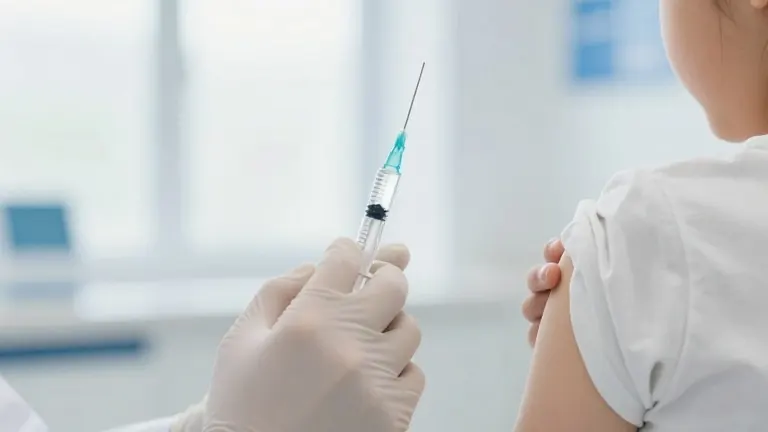
The United States currently reports twice as many confirmed measles cases as in the previous year. In response, many parents are administering the second dose of the measles, mumps, and rubella vaccine earlier than standard guidelines suggest. This approach involves giving the shot as soon as four weeks after the initial dose, a timeline previously reserved for specific outbreak scenarios.
Elias Kass, a naturopathic physician in Seattle, noted that more parents are adopting this accelerated schedule. The Centers for Disease Control and Prevention typically recommends the first MMR shot after a child turns one and the second between ages four and six. However, Kass began suggesting the combined MMRV shot, which includes chickenpox, at 15 months of age when case numbers started to rise. He explained that the decision is straightforward: "There’s no reason to wait, measles is here now."
Margot Taylor in Chicago described how the outbreak changed her family's routine. Her oldest child, born in 2019, followed the traditional schedule at ages one and four. For her second child, born in 2023, a pediatrician recommended the second shot at age two due to a local outbreak in Chicago. Her third child, born in 2025, received the first dose after her first birthday and the second dose only three months later in June.
Taylor expressed concern that early administration might reduce vaccine efficacy. However, evidence indicates the vaccine remains effective at younger ages. The standard recommendation to wait until kindergarten age is largely logistical, designed to ensure children are fully vaccinated before school entry and to consolidate multiple vaccinations into fewer doctor visits.
The urgency of the schedule was personal for Taylor. Her third daughter, then only one month old, was exposed to measles at an airport during a west Texas outbreak. The infant developed a fever and required hospitalization in a negative-pressure room until test results came back negative. Taylor stated she is grateful for the vaccines but wonders why parents must now manage complex schedules: "I never thought that I would have to be learning the vaccine schedules."
International precedents support the shift. Germany changed its guidelines after a severe outbreak in 2001, moving the first shot to 11 to 14 months and the second to 18 to 23 months. By 2020, Germany moved the second dose to four weeks after the first. Catherina Becker, a German scientist, said there is no indication that children vaccinated on this accelerated rhythm face higher risks. She argued the CDC should "absolutely" consider a stronger recommendation for earlier second doses.
Some parents are also giving the first shot at six months, a timing the CDC recommends for outbreak areas or international travel. Infants who receive the first dose early require a third dose later. This extra step is necessary because maternal antibodies passed in utero can interfere with the immune response to the initial vaccination in very young infants.
The second dose serves as a critical "second chance" for individuals who did not respond to the first shot, a phenomenon discovered in the late 1980s. Becker compared a 1998 Alaska outbreak, where only 17 of 2,186 vaccinated students became ill, with a 2010 German outbreak where 71 of 300 partially unvaccinated students were sickened. She concluded that the data clearly demonstrates the vaccine's protective power.
Source: The Guardian