Two Checkpoint Deaths Trigger 1967-Scale West Bank Push
Netanyahu orders a massive military operation ahead of elections as bulldozers flatten homes in Hebron.
By Julian Kobayashi ·
Two Israeli soldiers died in a twenty-minute firefight at a checkpoint near Hebron, an event that has triggered the largest planned West Bank military operation since 1967. Prime Minister Benjamin Netanyahu pledged to launch a campaign on a scale not seen since the Six-Day War, a conflict that began the Israeli occupation of the territory nearly six decades ago.
Following the attack, which left three other soldiers wounded, Netanyahu addressed the public from the site of the shooting. He stated that Israel would act to demolish the area and change it completely. The military confirmed that two gunmen opened fire on soldiers positioned behind concrete barriers. The exchange of gunfire ended when troops killed the attackers. This incident has accelerated a surge in violence and land seizures by settlers in the region.
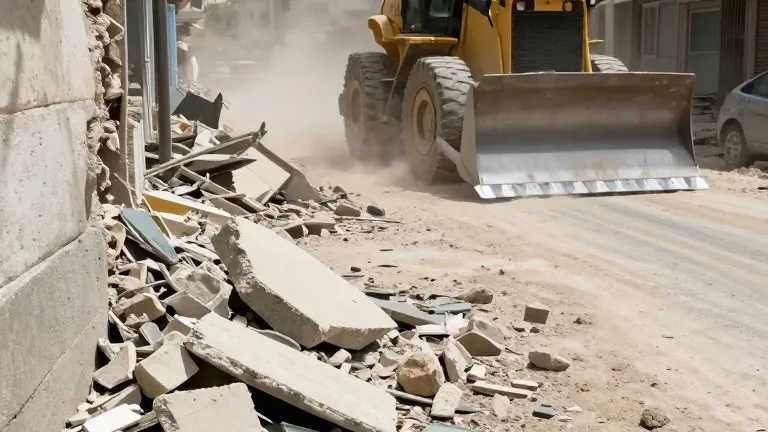
Demolition work began immediately after the incident. Bulldozers started flattening homes in a Hebron neighborhood on Friday afternoon, forcing hundreds of Palestinians to leave their residences. The Israeli military described the operation as a necessary response to the threat, while the United Nations Human Rights Office warned that the situation in Hebron, the West Bank's most populous city, has reached a new level of dehumanization for its residents.
The timing of the announcement coincides with national elections scheduled for October 27. Current polls show Netanyahu and his main rival, Gadi Eisenkot, running neck and neck. Neither candidate currently holds enough support to form a government. Analysts argue that the prime minister is using the crisis to project strength to voters. Danny Citrinowicz, a senior researcher at the Institute for National Security Studies, noted that Netanyahu is positioning himself as the protector of Israel. He described the prime minister's pre-election strategy as focusing on security to demonstrate support for the public.
Critics view the large-scale operation less as a long-term security plan and more as a political maneuver to retain power. Citrinowicz labeled the eviction of families from the attackers' neighborhood as collective punishment, noting that there is no evidence linking the residents to the two gunmen. He argued that preventing future attacks requires giving hope to the population rather than punishing it. His view is that authorities should arrest those planning attacks while supporting the stability of the broader community.
Human rights groups have already weighed in on the military actions. B'Tselem, an Israeli organization, urged foreign governments to intervene to prevent what it called another wave of ethnic cleansing and war crimes. This follows a similar assessment by Human Rights Watch regarding last year's assault on two refugee camps in the northern West Bank, which displaced tens of thousands of people. Israel rejects the characterization of those expulsions as war crimes. The current operation adds to a network of 925 checkpoints and barriers that restrict movement across the occupied territory.
Source: NPR