San Diego County uses high-speed machines to sort nearly all primary ballots
Officials describe a multi-step process involving signature checks and isolated counting rooms to protect the integrity of the mail-in vote.
By Gabriel Qureshi ·
Nearly 95 percent of the ballots counted in the recent San Diego County primary were cast by mail.
The Registrar of Voters office handles these envelopes through a sequence of mechanical and manual checks before any votes are tallied.
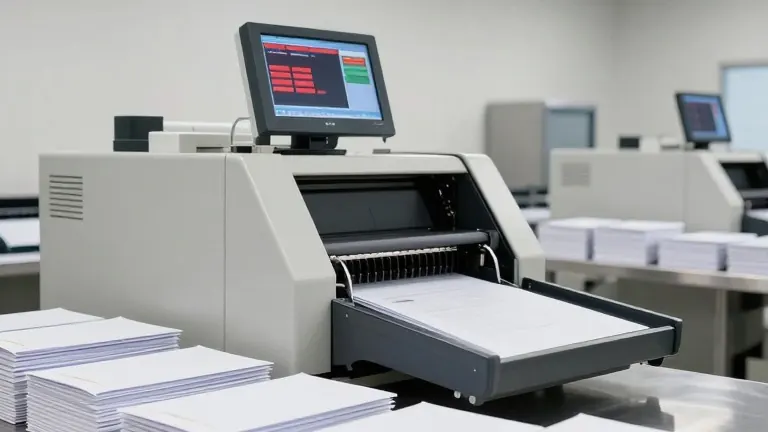
The process begins when mail arrives from the post office or county drop boxes. Envelopes move through a high-speed sorting machine capable of processing 42,000 units per hour.
The machine scans each envelope and captures a digital image of the voter's signature. During a recent visit, the system flagged a high volume of envelopes due to a mechanical fault.
Technicians identified a belt issue causing the rejections. After repairs, the affected envelopes were reprocessed and returned to their correct sorting trays.
Election workers then move to a separate room to compare the scanned signatures against the voter's signature on file. Registrar of Voters Sean Brom stated that any discrepancies are sent for further review by other team members who can examine past signatures.
Workers occasionally find ballots where family members signed for one another. A mismatch does not immediately reject a ballot. Instead, the county mails a letter to the voter. Voters have 22 days after Election Day to provide a current signature to correct the issue.
Until the signature is verified, the envelope remains sealed. An election worker noted, "The challenge will remain on that envelope, and the envelope will never get opened."
Once signatures are cleared, the ballots pass through a second machine to verify that the count leaving the room matches the count that entered. Workers then open the envelopes while keeping the voter's name hidden from the ballot to preserve secrecy.
Brom explained, "You can't unsee what you just saw. We know if somebody voted, but we don't know how they voted." This separation ensures workers cannot connect a specific voter to their choices.
The county uses unique IDs on every envelope to prevent multiple votes. If a voter requests a replacement ballot, the original is flagged. Officials track the movement of ballots between rooms to maintain a clear chain of custody.
For this primary, 1.37 percent of mail-in ballots were rejected overall. The most common reason for rejection, aside from late mailings, was a signature that did not match the voter's driver's license record. Less than 2 percent of all mail-in ballots failed the process during the primary election cycle in San Diego County.
Source: KNSD