NHTSA Proposal Would Drop Driver-Only Controls From Federal Lighting Rule
The agency also opened an audit query last month into how Tesla certified the Cybercab without mirrors, pedals, or a steering wheel.
By Julian Kobayashi ·
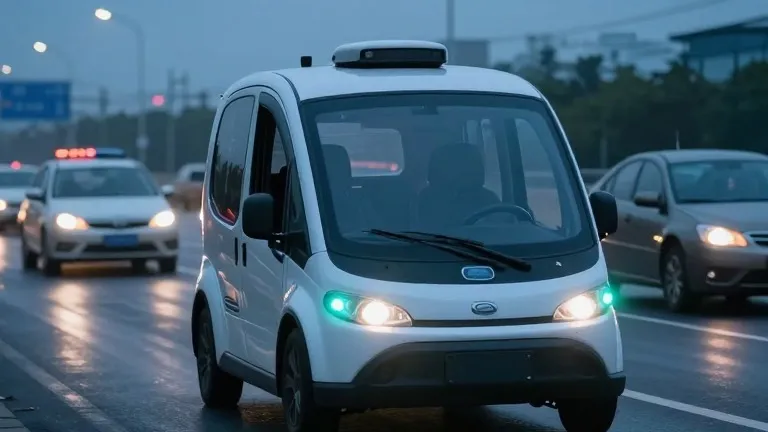
NHTSA released proposed amendments to Federal Motor Vehicle Safety Standard No. 108 on Oct. 23, adding a cyan marker lamp option for vehicles operating without a human driver. The agency says the lamps would "clearly and consistently signal to law enforcement and other road users when an automated driving system is operating the vehicle."
The color fills a gap. Red, amber, white, and flashing red or blue are already assigned to braking, turn signals, headlights, and emergency vehicles. Cyan would not collide with those functions. Mercedes-Benz obtained state approval for turquoise lights on its Level 3 Drive Pilot vehicles, then dropped the approach in favor of a Level 2++ system. NHTSA wants one federal rule that Waymo, Nuro, Zoox, GM, and Mercedes could all follow.
Installing the lamps stays optional. Any manufacturer that does install them must meet federal specifications for color, brightness, and placement. The agency also proposes removing lighting requirements that assume a human is inside the vehicle: physical hazard switches, manual beam shifters, and turn levers. It would update the 12.8-volt testing standard for modern LED systems and is considering dropping rules on whether high beams sit above or below low beams.
The proposal sits alongside DOT work to speed autonomous vehicle deployment and ease the path for cars built without steering wheels or pedals. Regulators are still enforcing current rules in the meantime. In September, NHTSA opened an audit query into the Tesla Cybercab "to examine the process and technical data on which Tesla relied when certifying the Cybercab and related issues." The Cybercab lacks sideview mirrors, pedals, and a steering wheel, all required under standards now in force.
Source: The Verge