Magnificent Seven Fragment as Correlations Hit Decade Low
Apple leads the pack while Tesla and Meta lag, forcing investors to pick individual stocks rather than trading the group as a single unit.
By Julian Kobayashi ·
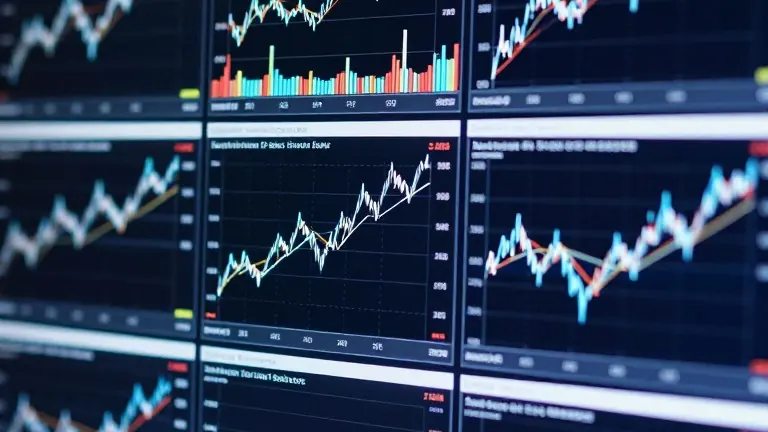
The Magnificent Seven no longer move in lockstep. CNBC analysis shows the rolling 60-day correlation of daily returns for the group has fallen to its lowest level in more than a decade. This statistical shift means the seven technology giants are trading less like a cohesive block and more like individual stocks with distinct drivers. Investors are now forced to make precise choices rather than buying the group wholesale.
The disintegration of the group’s unified movement has cost the cohort against the broader market. The Roundhill Magnificent Seven ETF, or MAGS, is up 7% year to date. By comparison, the S&P 500 has gained 12%. Tesla and Meta are the only two names in the group that are down in 2026. Nvidia and Apple are the only two outperforming the S&P 500 benchmark.
Analysts say the divergence reflects a deeper focus on independent fundamental growth drivers. Thomas DiFazio, an ETF strategist at Roundhill Investments, noted that investors are now focusing on micro factors. He explained that companies are being ranked based on their specific success in the artificial intelligence landscape. Gil Luria, an analyst at D.A. Davidson, added that the companies have different exposures to AI. He said this requires a granular approach to ownership.
Apple exemplifies the shift in market sentiment. The iPhone maker was punished for low capital expenditures in the AI arms race during 2025. It finished that year as the second worst performer, returning 8.9%. In 2026, Apple leads the group with a 28% gain. Jay Woods, chief market strategist at Freedom Capital Markets, called Apple the consistent tortoise of this race. He described the company as a technology utility and a consumer staple because its products are embedded in daily life.
Nvidia remains volatile amid concerns about chip demand durability. The stock peaked on Oct. 6 and has fallen by more than 13% since then. Woods noted that the valuation is relatively and historically cheap. He believes the stock is in a digestion phase and favors the setup due to continued demand for chips. The market is closely watching the durability of demand for Nvidia’s processors.
Alphabet faces a technical test after a run from March to May. The company reports third-quarter earnings after the bell on Wednesday. Woods is watching competition from other AI platforms for its search business. Investors are also evaluating the performance of Google Cloud and the Gemini AI model. The stock needs to find upward momentum after its recent chart weakness.
Amazon’s stock has been slow and steady. Its cloud computing business, Amazon Web Services, drives a majority of profits. Revenue from that segment grew 37% year over year in the second quarter. This growth lagged Azure’s 43% growth and Google Cloud’s 82% growth in the same period. Amazon posts earnings after the close on Thursday.
Meta stock surged in September on excitement over its new personal AI assistant, Muse. App Store downloads were high. However, the stock turned negative after the company reported negative free cash flow in its third-quarter earnings last week. The company also raised the floor of its full-year capital expenditures. Investors are now concerned that attractive returns on that spending may be further away.
Microsoft has recovered from fears that AI would disrupt its software business. Woods said those fears were overblown. The stock now faces resistance in the $530 to $550 range. Selling pressure could threaten further gains. Investors are watching Azure’s cloud growth. Earnings on Wednesday will help determine if the stock can break above that technical level.
Tesla has been left in the dust among the group. Its investment case now rests on opportunities beyond electric cars, including robotics and robotaxis. Luria is skeptical of its inclusion in the Magnificent Seven, arguing its valuation carries an Elon premium. Analyst ratings remain generally positive. According to LSEG data, 97% of analysts have a buy or strong buy rating on Amazon, Microsoft, and Nvidia. Apple sits at 58%, Alphabet at 92%, Meta at 89%, and Tesla at 50%.
Source: CNBC
More Business · Consumer Watch · Report a business · Got a Story?