Goldman's AI Strategy: Balancing Tech and Human Judgment in Business Schools
The Hebrew University Business School is integrating artificial intelligence into its curriculum, emphasizing critical thinking over full automation.
By Yuna Fletcher ·
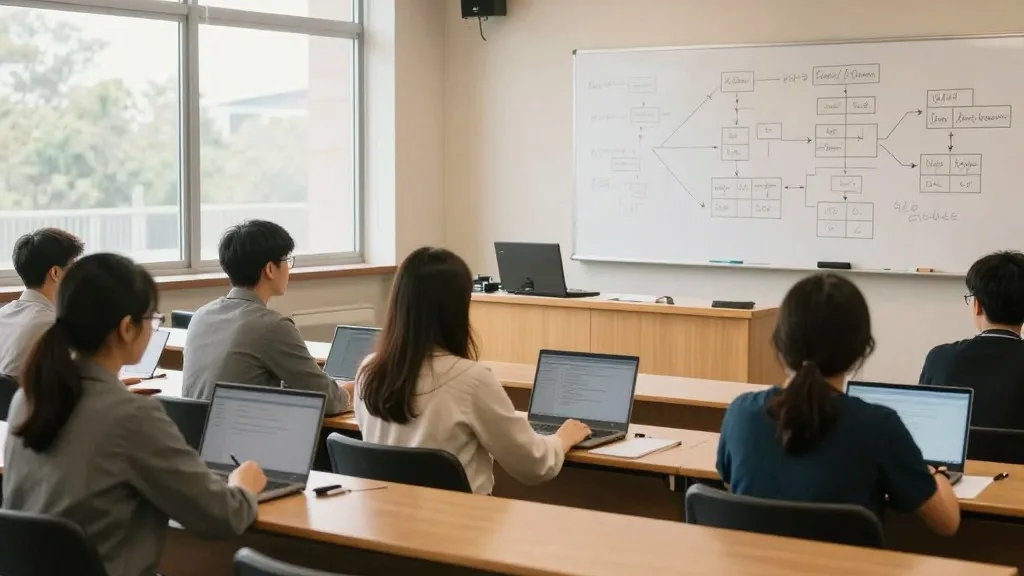
The Hebrew University Business School in Jerusalem is navigating a significant shift in its educational model, with 24 patents held by its new faculty member serving as a marker of the institution's move toward applied data science. Professor Claudia V. Goldman, who has served as an associate professor in the Data Science Department since July 2024, is central to this transition. Her tenure marks a specific effort to integrate artificial intelligence into the classroom not as a replacement for human effort, but as a tool for solving complex, real-world problems.
Goldman’s background bridges the gap between academic research and corporate industry, a blend that is increasingly valuable in the current market. She holds three degrees from the Hebrew University, including a PhD in computer science completed in 1999. Her career includes research posts at Bar-Ilan University, the University of Massachusetts Amherst, and the University of Haifa between 1999 and 2005. She later transitioned to the private sector, leading a team at Samsung Telecom Research in Herzliya for three years and spending 15 years as a research scientist at General Motors. At GM, she worked on learning agents for vehicle user experiences, a role that highlights the practical application of AI in consumer technology.
The integration of AI into business education requires a clear framework for usage. Goldman has established specific protocols for her students, informing them exactly when and why AI tools are permissible. A key requirement is that students must credit the technology and explain their specific use of it. Fully AI-generated responses are not accepted, and students are aware that their writing can be analyzed for AI presence. The goal is to encourage brainstorming with the technology while maintaining a critical stance. Students are taught to check for bias and verify the existence of cited sources, ensuring that the final output reflects human oversight.
Assessment methods have also evolved to accommodate this new landscape. Rather than relying solely on written exams, Goldman evaluates students through a mix of classwork, presentations, and peer-organized activities. This approach allows for in-person assessment of understanding. The curriculum also extends beyond technical skills to include discussions on human responsibility and professional values. Courses offered by the Business School include AI for Social Good, Responsible AI, and When AI Meets Humans and Society, reflecting a broader interest in the societal implications of the technology.
The broader context of AI in the workforce remains a topic of debate. When asked about Bill Gates’s suggestion of a 'Human Reserved' concept, which would designate certain jobs for humans, Goldman noted that the issue is not a simple binary. She argued that the focus should be on understanding the benefits AI brings to different roles and identifying the critical skills needed to strengthen those roles. This perspective aligns with the university’s push to prepare students for a hybrid future where human judgment remains essential.
Goldman’s personal history also informs her perspective. Born in Argentina, she moved to Israel in January 1984 at the age of 16. She attended a Jewish school in Buenos Aires through seventh grade, studying in Yiddish, Hebrew, and Spanish. Her father had long desired to leave Argentina, and after she expressed her desire to grow up in Israel in 1983, the family made aliyah six months later. She met her husband, Professor Roy Shenhar, on the Givat Ram campus in 1995. They married in 1999 after a chance encounter on the stairs of the Ross Building led to a traditional exchange of ice cream.
The Hebrew University continues to expand access to these new fields through its Free Listener Program, which allows senior citizens to audit courses. With the fall semester now beginning, the institution is placing greater emphasis on these interdisciplinary approaches. The market for professionals who can navigate the intersection of data science, ethics, and business strategy is growing, and institutions like the Hebrew University are positioning themselves to lead in this area. Goldman’s role is indicative of a broader trend where academic leadership is drawn from those with substantial industry experience, ensuring that theoretical knowledge remains grounded in practical application.
Source: The Jerusalem Post
More Business · World news · Consumer Watch · Report a business · Got a Story?