Finnish Wilderness Displaced: Google's AI Expansion Forces Wolves Into Villages
Unauthorized forest clearing for new data centers has turned woodland into mud, prompting local wildlife to migrate toward populated areas in the Muhos and Kajaani regions.
By Christopher Reed ·
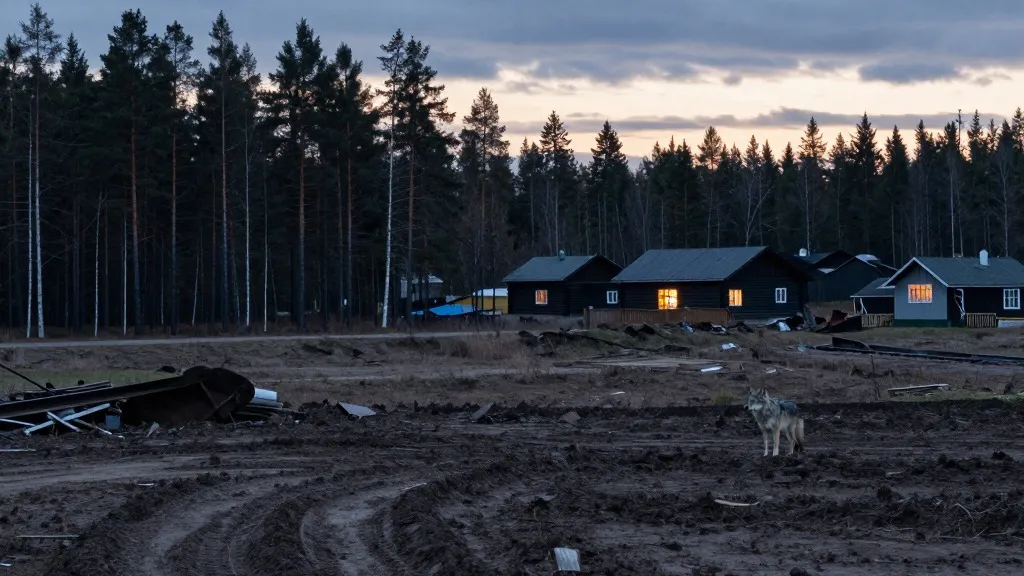
Wolves are now roaming through Finnish villages, a direct consequence of the massive forest clearing undertaken for new artificial intelligence infrastructure. The shift in wildlife behavior marks a tangible escalation in the conflict between rapid technological expansion and local ecosystems. Residents report that animals previously confined to dense woodlands are increasingly entering populated areas, raising immediate concerns for community safety.
The source of this disruption is the construction activity near the villages of Muhos and Otanmäki, located in the Kajaani region. Google’s Finland country manager has issued an apology regarding the unauthorized clearings. The project has significantly altered the landscape, transforming approximately 816 acres of forest into an expanse of mud. This drastic change has effectively removed the habitat that local wolf packs and other wild animals relied on for survival.
Regulatory bodies have stepped in to address the situation. The Finnish Licensing and Supervision Authority, known as LVV, has ordered Google to cease work in areas where roughly 500 acres of forest have already been cleared. This site is situated 55 miles southeast of Otanmäki. The authority’s intervention highlights the severity of the unauthorized development, which critics argue proceeded with insufficient regard for local environmental regulations.
Local residents have long simmered with anger over the damage to their surroundings. Anni Ranta, a 53-year-old resident whose family has lived in Otanmäki for generations, explained that the displacement of wildlife was a predictable outcome. “We had wolves coming into the village because all the wild animals moved out of the forest,” Ranta stated. She also expressed broader concerns, fearing that the presence of U.S.-owned data centers could make Finland a more attractive target for Russian aggression.
The environmental impact extends beyond the mere loss of trees. Locals have reported a variety of other negative side effects associated with the construction. These include persistent noise from machinery and factory operations, streams turning brown due to runoff, and the displacement of rare bird species. These grievances mirror complaints raised in other parts of the world where AI data centers have been built, suggesting a recurring pattern in the industry’s environmental footprint.
A representative for the Finnish Association for Nature Conservation, or SLL, described Google’s approach to environmental policy as unprecedented and clearly flawed. The organization’s stance aligns with the actions taken by the LVV, which issued the formal stop-work order. Despite the regulatory pressure, Google’s position remains one of cooperation. A spokesperson for the company stated, “We will fully comply with LVV’s requests in this matter.” The company added that it looks forward to maintaining an active and open dialogue with authorities to strengthen its partnership with Finland and local organizations.
This incident is the latest development in a series of reports regarding Google’s data center projects in Finland. Earlier this month, it was noted that the Finnish government had given notice to Google to halt construction activities in both Muhos and Kajaani. The current situation underscores the friction between the global demand for computing power and the local environmental realities of the hosting sites. The company appears to be betting that the long-term business benefits of the data centers will eventually outweigh the immediate environmental and social costs.
The situation illustrates the tangible risks of accelerating AI infrastructure development without robust environmental safeguards. As the mudflats expand in place of the forest, the local fauna has no choice but to seek new territory. For the residents of Otanmäki and neighboring villages, the arrival of wolves is a stark reminder of the changing landscape. The dialogue between Google, regulators, and the community remains ongoing, with the stop-work order serving as a pivotal moment in this complex dispute.
Source: Tom's Hardware