San Diego Neighborhoods Host Candlelight Walk for Day of the Dead
The annual procession begins in Balboa Park and winds through Sherman Heights on Nov. 2, featuring altars, Aztec dancers, and community memorials.
By Julian Kobayashi ·
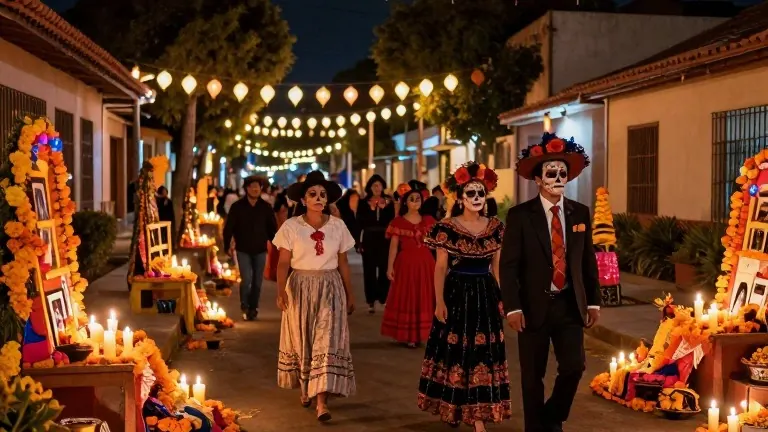
The Sherman Heights Community Center will host its annual Candlelight Procession on Nov. 2, marking the final day of the Day of the Dead observance. The event is set to begin at 4 p.m. at the Centro Cultural de la Raza in Balboa Park. Organizers expect the gathering to bring together residents and visitors from across the region to honor deceased loved ones.
The center has coordinated these events for decades, providing a local space for traditions that originated in Mexico and other Latin American countries. Staff and volunteers note that many community members maintain these customs but cannot easily travel to their countries of origin. The procession serves as a way to keep the cultural practices active within the neighborhood.
The tradition at the center traces back to Señor Domingo Sandoval, a Sherman Heights resident known for growing cempasúchitl flowers. Daniela Kelly, the center's executive director, said Sandoval asked the center if he could build an ofrenda there, establishing the precedent for current celebrations. Today, the event has expanded to include multiple stops and a larger participant base.
The route proceeds from Balboa Park to the Sherman Heights Community Center, then to Logan Heights, and concludes at Chicano Park. Residents living along the path will display ofrendas in their homes. Attendees will stop at these locations to view the altars and interact with the families who created them. This interaction is a central part of the experience for many participants.
Francisco Soto, who works at the community center, said the event is open to everyone, regardless of where they live. His family lives in Sherman Heights and maintains an outdoor altar at their home. Participants sometimes stay at the house, where the family offers hot chocolate and other foods. Soto described his home as “La casa de Chocolate,” noting that they try to preserve the tradition authentically within their means.
Cynthia Soto, Francisco’s sister and a procession leader, will open the walk. She will dress as a Catrina, a figure she explained originated as a satire of Mexican society. The character represents the idea that death comes to everyone, regardless of their status or beauty. She will be the first to step onto the route and guide the group.
Calpulli Mexihca, an Aztec dance group, will also lead the procession. The group uses conch shell trumpets and drums to bless the altars at participating homes. Their performance sets the tone for the walk, blending ancestral sounds with the communal atmosphere of the event.
The procession includes a diverse group of participants. This year’s attendees will include residents from Tijuana, university students carrying small nichos, and performers such as mariachi musicians. Decorated lowrider cars and bikes are also expected on the route. The Fern Street Circus participated last year with stilt-walking Catrinas. Daniel Pozos, a volunteer for more than 20 years, said the group creates a sense of shared support. He noted that when people see the dancers bless homes and grieve together, it becomes a communal act. “It’s sharing your pain and we understand you,” Pozos said. “And we see you and we’re here for support that way.”
Source: KPBS