Edward Boccia Retrospective Occupies All Three Rooms of Slein Gallery
The Central West End gallery departs from its usual single-room format to display over 30 works spanning the late artist's six decades in St. Louis.
By Julian Kobayashi ·
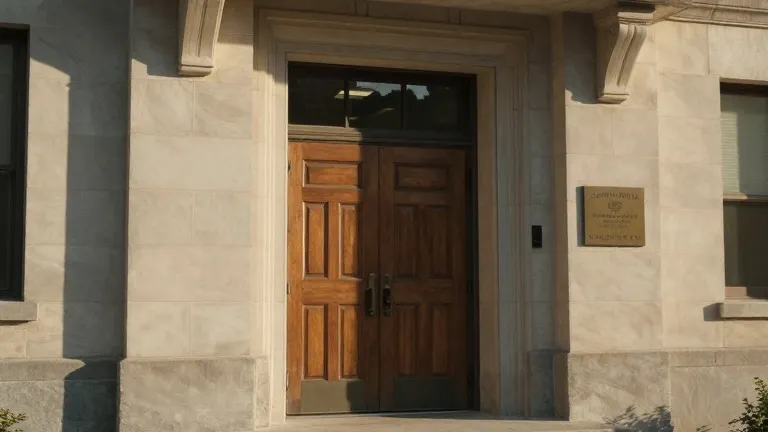
Philip Slein Gallery has expanded its exhibition space to three rooms for the first time in its 23-year history, dedicating the entire venue to the career of Edward E. Boccia. The show, titled Edward E. Boccia: An American Modernist, opened on October 23 and remains on view through December 19.
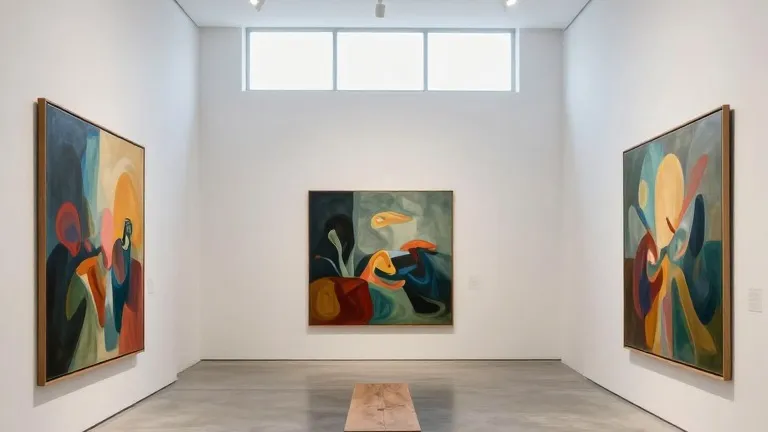
The gallery at 4735 McPherson typically hosts individual artists only in its front room. For this retrospective, owner Philip Slein filled the main hall, a connecting hallway, and the rear space with more than 30 paintings. Slein described the scale of the installation as the largest he has presented, noting that only a major institutional museum could host a larger survey of the artist's output.
Boccia was born in New Jersey in 1921 and moved to St. Louis in 1951. He taught at Washington University for more than 30 years before retiring as professor emeritus in 1986. A veteran of the World War II Ghost Army, he also studied at the Pratt Institute, the Art Students League, and Columbia University. He continued painting until his death in 2012 at age 91.
The exhibition groups the works by scale and theme. The front room features large-scale pieces, including the nine-panel polyptych Eugene's Journey and the 2004 triptych David's Death. A hallway displays mythic ocean scenes, while the final room presents a salon-style arrangement tracing his artistic evolution from a 1950s portrait to a 2012 work. The collection references influences such as Paul Cézanne, Pablo Picasso, and Max Beckmann.
Art historian Rosa Berland, who is based in New York, curated the companion volume Edward E. Boccia: Painter of Nightmares and Dreams. The book, published by Hirmer, is the first major monograph on Boccia and includes scholarly essays and fold-out plates. Berland characterized Boccia as a polymath who studied philosophy and psychoanalysis but preferred viewers to experience his work intuitively rather than analytically.
Berland credited Morton D. May, whose collection was partly gifted to the Saint Louis Art Museum, as Boccia's most important patron. She described the artist's life as the story of a New York native who found professional success in St. Louis. The show includes a pamphlet with the instruction to simply experience the art rather than worry about its meaning.
Source: St. Louis Magazine
More News · St. Louis news · Report a business · Got a Story?